


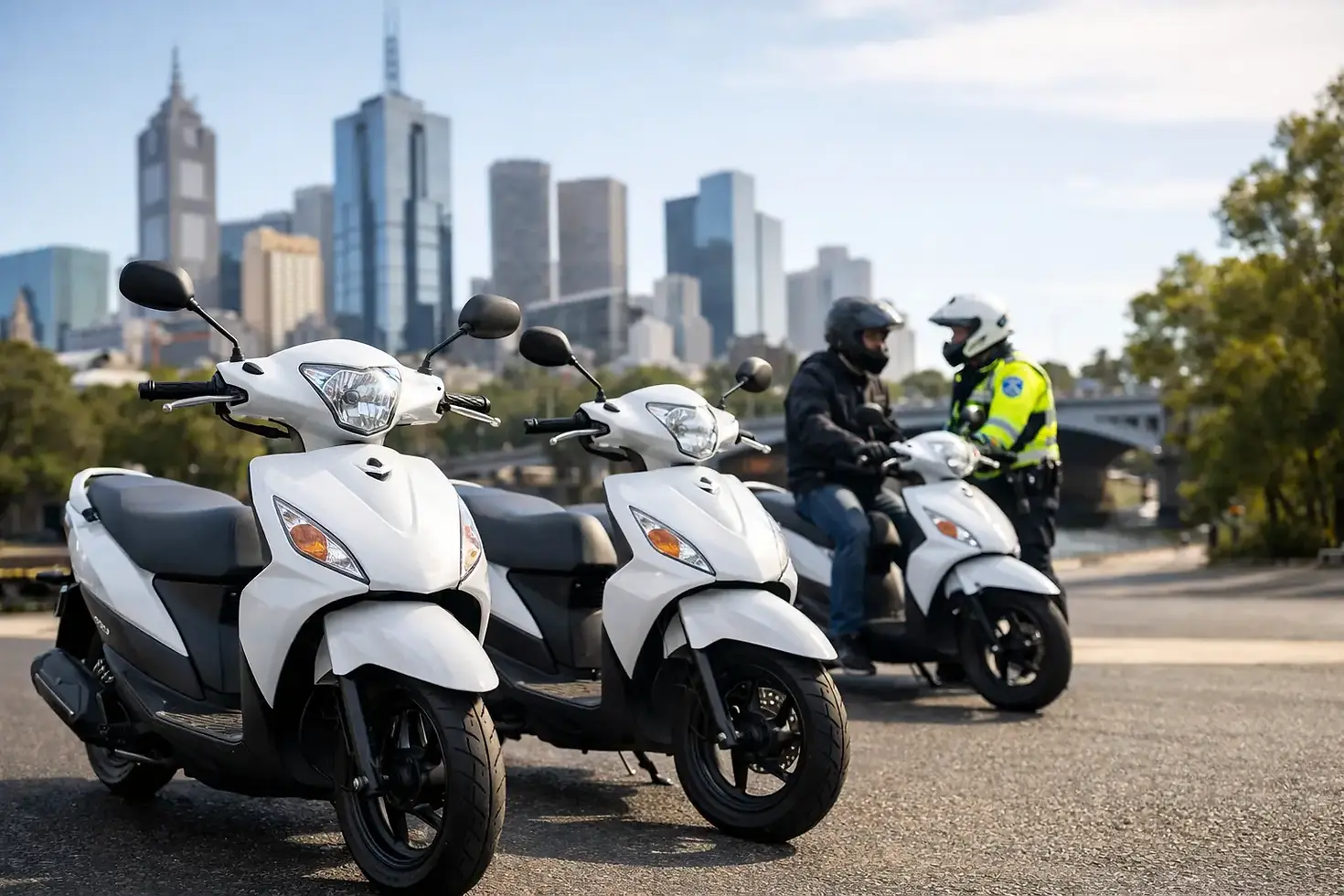
What Licence for Scooters Do You Need in Victoria?
A scooter can save you a fortune on parking, petrol and packed trams - but choosing the wrong one for your licence can stop your plans before you leave the driveway. If you are asking what licence for scooters you need in Victoria, the answer comes down to one detail: is it an electric rideable, a legal moped, or a motor scooter?
They may look similar from the kerb, but Victorian road rules treat them very differently. Here is the practical way to work out what you can ride before you buy, rent or book a scooter for work.
What licence for scooters applies in Victoria?
There is no single scooter licence. In Victoria, the vehicle's legal classification decides what you need.
A low-speed electric scooter that meets the state's personal mobility device rules does not require a driver licence. A genuine moped can generally be ridden on a full car licence. A motor scooter, including most petrol scooters above 50cc, requires a motorcycle learner permit or motorcycle licence.
The model name, its styling and what a seller calls it are not enough. Check its engine capacity, designed top speed, electric motor specifications and registration status. A small-looking scooter can still be legally classed as a motorcycle.
Electric scooters: no licence, but strict riding rules
For a personal electric scooter that meets Victoria's rules, you do not need a car or motorcycle licence. You must be at least 16 years old and wear an approved bicycle helmet.
That does not mean every electric scooter is legal to ride wherever you like. A legal personal mobility device must meet the applicable design requirements, including limits around weight, width and speed capability. When riding, the speed limit is generally 20 km/h. You cannot ride on footpaths, and the roads and paths you can use are restricted.
In practical terms, electric scooters suit short local trips where you have a safe route, secure parking and do not need to carry much. They are handy for getting from the station to work, but they are not a replacement for a registered road scooter if you need to travel longer distances, work deliveries or ride through faster traffic.
Be careful with high-powered electric scooters advertised online. If it exceeds the personal mobility device limits, it may not be legal to use on public roads or paths without meeting motorcycle-style registration and licensing requirements. A product being available to buy does not automatically make it road legal in Victoria.
Mopeds: when a full car licence may be enough
A moped is a very specific legal category. In Victoria, it generally has an engine capacity of no more than 50cc and a maximum designed speed of no more than 50 km/h.
If the scooter genuinely meets the moped definition, you can usually ride it with a full Victorian car licence or a motorcycle licence. A car learner permit is not the same thing as a full car licence, so do not assume your Ls allow you to ride a moped.
A moped still needs to be registered, and you still need to follow road rules, wear an approved motorcycle helmet and ride responsibly. It is a motor vehicle, not an e-scooter. You will be sharing roads with cars, buses, trucks and cyclists, so confidence in traffic matters as much as the licence in your wallet.
The catch is speed. Some scooters have a 50cc engine but can travel faster than 50 km/h by design. In that case, they may not qualify as a moped. Modifications can also change the classification. If there is any doubt, treat it as a motorcycle until you have confirmed the details.
Motor scooters: you need a motorcycle licence
Most road-going scooters are motorcycles in the eyes of Victorian law. That includes scooters over 50cc, scooters designed to travel above 50 km/h and many electric models built for normal road speeds.
To ride one, you need a Victorian motorcycle learner permit or motorcycle licence. Holding a full car licence does not give you permission to ride a 125cc, 155cc or 300cc scooter, even though it has automatic transmission and is easier to manage than a manual motorbike.
If you are starting from scratch, the usual first step is completing an approved motorcycle learner course and obtaining your motorcycle learner permit. Learner riders need to follow learner conditions, including displaying an L plate, maintaining a zero blood alcohol level and not carrying a pillion passenger. You also need an approved motorcycle helmet and suitable protective gear.
Automatic scooters can be a great first step because there are no gears or clutch to manage in peak-hour traffic. But automatic does not mean licence-free. The licence requirement is based on the vehicle classification, not how easy it is to ride.
A quick real-world example
A 50cc scooter designed to top out at 45 km/h may qualify as a moped, so a rider with a full car licence may be able to ride it. A 125cc scooter used for commuting from Clayton to South Melbourne requires a motorcycle learner permit or motorcycle licence. A compact electric scooter used on a shared path may need no licence at all, provided it meets personal mobility device rules.
Three scooters, three different answers. That is why checking before you pay is worth the two minutes it takes.
Does renting a scooter change the licence rules?
No. Renting does not change the licence you need. The rider is still responsible for holding the correct licence or permit for the vehicle and complying with all road rules.
Before you rent, make sure the provider knows what licence you hold and what you intend to use the scooter for. A short commute, food delivery shift and weekend ride can involve different distances, traffic conditions and carrying needs. The best scooter is not just the cheapest option - it is the one you are licensed to ride and comfortable controlling.
For people who already have the right motorcycle entitlement, renting can be a simple way to get moving without dealing with upfront registration, servicing or surprise repair bills. Skootify Australia can help match eligible riders with a practical scooter option, with maintenance, registration, CTP insurance, helmets and support built into the service.
International licences and scooter riding
If you are new to Australia, do not assume an overseas car licence lets you ride every scooter. Your overseas licence needs to authorise the same class of vehicle you want to ride here. A car-only licence from another country may be enough for a qualifying moped, but it will not necessarily cover a motor scooter that Victoria classifies as a motorcycle.
Your visa status, how long you have been in Victoria and whether your licence is in English can also affect what documentation you need to carry. If you are unsure, check your eligibility before booking. It is much easier to choose a moped or complete your motorcycle learner training than to risk riding uninsured or unlicensed.
Choose the scooter that fits your licence and your day
If you only need short, low-speed local transport and have safe paths available, a compliant electric scooter may be enough and no licence is required. If you have a full car licence and want a simple registered option for local roads, a genuine moped may suit. If you need faster commuting, delivery work or more confidence in traffic flow, a road scooter with a motorcycle licence is usually the better fit.
Do not choose based on appearance alone. Ask for the engine size, designed top speed and registration classification, then match that information to your licence. Once that is sorted, you can focus on the good part: easy parking, low running costs and getting where you need to go without the hassle of a car.

Comments