


How to Reduce Daily Commuting Costs in Melbourne

A $5 coffee is easy to notice. A daily commute that quietly drains hundreds of dollars each month is harder to spot. To reduce daily commuting costs, start by looking beyond the fare, fuel or parking price and add up the whole trip: time, car wear, surprise repairs, tolls, parking fines and the cost of being stuck when your transport lets you down.
For plenty of Melbourne commuters, the cheapest option is not always the one with the lowest price at the start of the week. It is the option that gets you to work reliably, parks close by and does not hit you with expensive extras later.
Find the real cost of your commute
Before changing anything, track your travel costs for two weeks. Include every trip to work, TAFE, uni, shifts, appointments and errands you normally do on the way home. If you drive, write down fuel, tolls, parking, servicing, tyres, registration, insurance and depreciation. If you use public transport, include fares plus any rideshare trips or paid parking needed to cover the gaps.
The result can be surprising. A car that is paid off can still be expensive to keep on the road, especially if it spends most of the day parked in a city car park. A train may look cheap per trip, but it becomes less convenient if missed connections regularly lead to rideshare fares or late arrivals.
Work out your weekly total, then multiply it by 48 working weeks. Leaving a few weeks out makes the number more realistic and gives you a useful annual benchmark. Once you know what you are actually spending, you can compare alternatives properly rather than guessing.
Cut the costs that grow fastest
Some commute expenses are fixed, while others climb every time you travel. Focus first on the costs that stack up quickly.
Parking can cost more than fuel
CBD and inner-suburb parking can turn an otherwise affordable drive into a costly habit. Even lower-priced all-day parking adds up over a month, while short-stay parking is particularly painful for split shifts, appointments and casual work.
If driving remains your best option, check whether your workplace has staff parking, whether a nearby outer-zone car park is practical, or whether you can park once and walk the final few blocks. Just make sure the saving is worth the extra time and does not put you in an unsafe or poorly lit area after late shifts.
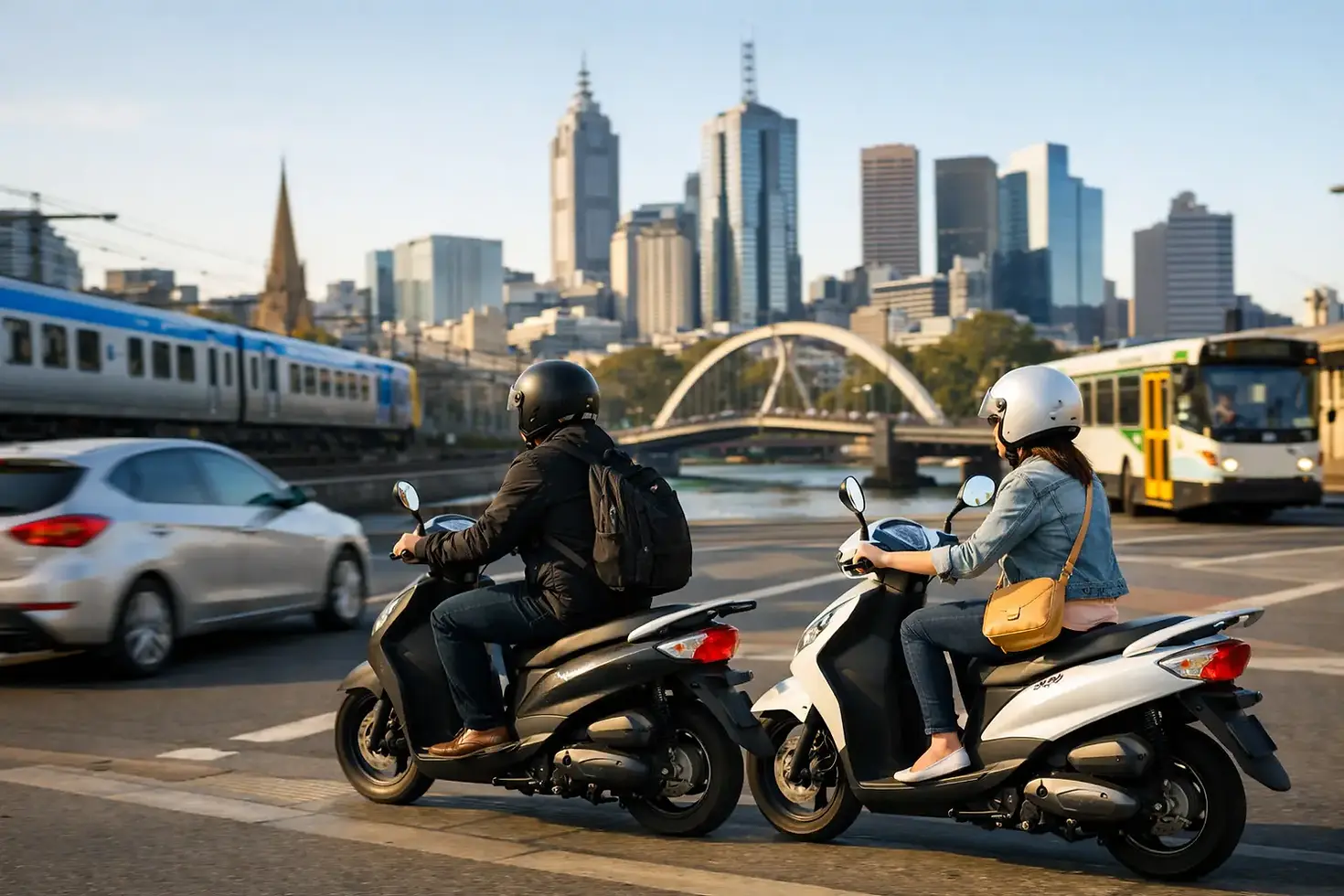
For riders, a scooter or motorbike can make a real difference because parking is generally easier to find and takes up far less space. Always use legal motorcycle bays or permitted parking areas, and check local signs before leaving your vehicle.
Fuel rewards smoother, lighter travel
Heavy stop-start traffic uses more fuel than most people expect. Aggressive acceleration, long idling, under-inflated tyres and carrying unnecessary gear in the boot all push consumption up.
You do not need to crawl along to save money. Keeping tyres at the recommended pressure, planning a route with fewer bottlenecks and combining errands into one journey can lower fuel use without making your day harder. If your car is mostly carrying one person through dense traffic, it is also fair to ask whether it is more vehicle than your commute needs.
Small convenience spending counts
A last-minute rideshare after a missed bus, a paid e-scooter for the final kilometre, or buying lunch because you had no time to get home can all be part of the transport budget. These costs are not always avoidable, especially for shift workers, but they should be visible.
Set a weekly transport amount that includes these extras. It helps you see whether a more reliable way to travel could cost less overall, even if its weekly price looks higher at first glance.
Choose the right transport mix, not one perfect mode
The best way to reduce your commuting bill depends on your route, roster and where you can park. Public transport is often excellent for a direct rail or tram trip into the city. Walking and cycling can be the cheapest choice for short, safe routes. Carpooling makes sense when colleagues travel from nearby areas on matching schedules.
But fixed-route transport does not suit every job. Early starts, late finishes, hospitality shifts, delivery work and trips between suburbs can make connections slow or unreliable. Driving a full-size car can solve the timing problem but add high fuel and parking costs.
That is where a scooter or motorbike can be a practical middle ground for eligible riders. It gives you point-to-point travel, uses far less fuel than many cars and is far easier to park around busy areas such as South Melbourne, St Kilda, Footscray or Clayton. It can also make the trip from home to a train station simpler if you still prefer rail for part of your journey.
It is not the answer for every commute. Bad weather, carrying large loads, family transport and long freeway rides can change the calculation. The smart move is to match the vehicle to the work you actually do most days, not the occasional trip you take once a month.
Reduce daily commuting costs without buying a car
Buying a vehicle brings upfront costs before you have even made your first commute. There may be a deposit, registration, insurance, servicing, tyres, roadside cover and the risk of an unexpected mechanical problem. That can be difficult if you are studying, new to Australia, building savings or working variable hours.
A flexible rental can make more sense when you need transport now but do not want the long-term financial weight of car ownership. Rather than budgeting separately for several vehicle expenses, look for a rental arrangement that clearly sets out what is included.
With Skootify Australia, scooter and motorbike rental is designed around that practical need. Registration, CTP insurance, maintenance, roadside assistance, helmet provision, mobile phone holders and 24/7 emergency support are included, with vehicles delivered to customers in supported areas. That means less time chasing a mechanic or organising a lift when something goes wrong.
The key is to compare the full weekly cost, not just the advertised starting price. Ask what happens if the vehicle needs servicing, whether roadside help is available, what insurance is included and whether there are limits that affect your planned use. A cheap-looking option can stop being cheap if every essential service is an extra.
If you expect to rely on two wheels for a long period, a rent-to-own arrangement may also be worth considering. It can offer a pathway towards ownership while keeping mobility available now. Read the terms carefully and make sure the repayment commitment suits your income, particularly if your work hours change from week to week.
Make your commute cheaper through routine
The lowest-cost transport plan only works if it is easy enough to repeat. Pack your bag, work clothes, rain gear and charger the night before. Check your route before leaving if roadworks, events or wet weather could affect the trip. A small amount of preparation prevents expensive last-minute choices.
For scooter and motorbike riders, keep safety gear dry and ready, allow extra time in wet conditions and do a quick check of tyres, lights and fuel before heading out. Riding smoothly and leaving with enough time is safer, less stressful and generally easier on fuel.
If you work in delivery or hospitality, treat transport as part of your earning setup. A vehicle that is cheap to run, simple to park and supported when needed can protect more of each shift's income. The same idea applies to commuters: saving ten minutes finding a car park and avoiding a costly fuel stop can matter just as much as shaving a few dollars off a fare.
Keep the savings instead of moving them elsewhere
Once you have found a cheaper commute, give the difference a job. Move the weekly saving into a separate account for an emergency fund, future vehicle purchase, course fees or rent. If the money stays in your everyday account, it tends to disappear into small spending.
Review your transport costs every few months, especially after moving house, changing jobs or changing your roster. A route that worked brilliantly in summer may not suit winter, and a new workplace can make a different transport mix more affordable.
The goal is not to choose the absolute cheapest trip on paper. It is to build a commute that gets you where you need to be, keeps your costs predictable and leaves more of your pay in your pocket.

Comments