


Petrol Scooters Versus Electric Scooters

A scooter can turn a slow, expensive commute into a quick ride with easy parking at the other end. But when choosing between petrol scooters versus electric scooters, the best option is not always the one with the lowest price tag or the newest technology. It comes down to how far you ride, where you live, how quickly you need to get moving and whether charging fits your routine.
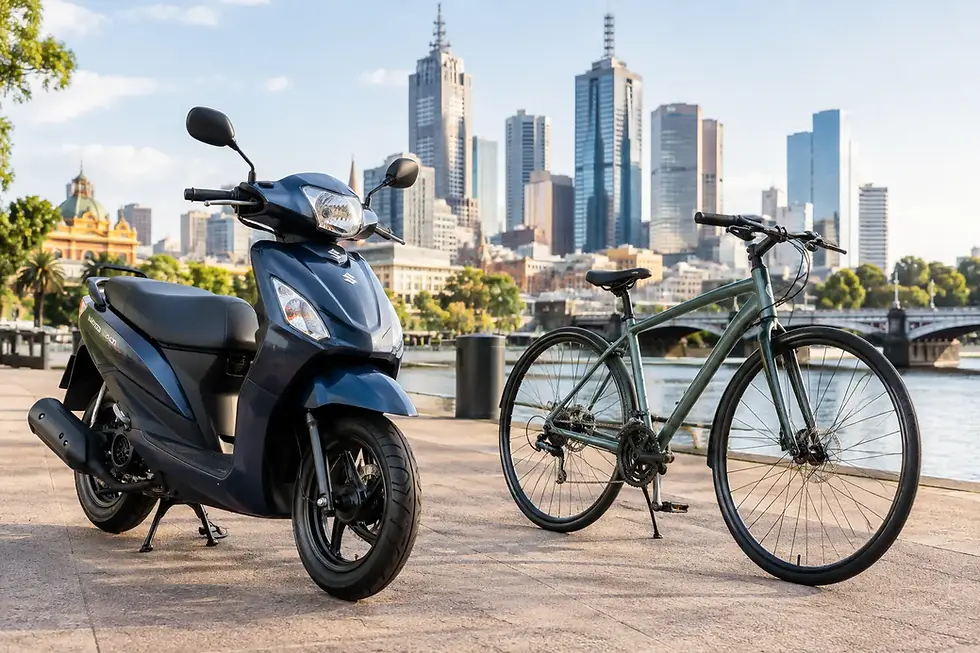
For many Melbourne and Geelong riders, a scooter is about one thing: getting where you need to go without relying on packed public transport, hunting for car parks or paying car-level running costs. Here is what to consider before you choose.
Petrol Scooters Versus Electric Scooters: The Real Difference
Petrol scooters run on unleaded fuel and can be filled up in minutes at a service station. They are familiar, proven and especially useful for riders who cover longer distances or work unpredictable shifts. Think delivery riders, people travelling between suburbs, or commuters who cannot guarantee access to a power point during the day.
Electric scooters use a rechargeable battery and electric motor instead of petrol and an engine. They are quiet, have no tailpipe emissions while riding and can cost less per kilometre in electricity than a petrol scooter costs in fuel. Their big advantage is simple daily riding when you have reliable charging at home, work or another secure location.
Neither is automatically better. A petrol scooter gives you flexibility on distance and refuelling. An electric scooter can make short, regular trips cheaper and quieter. Your normal week matters more than an impressive claim on a brochure.
Upfront Cost and Weekly Running Costs
The cost comparison has two parts: what you pay to access the scooter, then what it costs to keep it moving.
Electric scooters can cost more upfront because battery technology is expensive. Petrol scooters are often more affordable to buy initially, particularly among smaller commuter models. But buying is not the only path. Renting can be a practical option if you need transport now, want to avoid a large upfront payment or are working out what suits your routine.
On daily running costs, electric usually has the advantage when you can charge conveniently. Electricity is generally cheaper per kilometre than petrol, and electric motors have fewer moving parts than petrol engines. That can mean fewer routine mechanical jobs over time.
Petrol scooters still offer strong value. Smaller engines are famously fuel-efficient, and filling the tank takes only a few minutes. If you are doing long days, multiple delivery runs or travelling well beyond your usual local area, the ability to refuel almost anywhere can matter more than the per-kilometre saving.
Do not compare fuel or electricity alone. Include registration, compulsory third party insurance, servicing, tyres, repairs, parking, charging access and the time involved in keeping the vehicle ready. A rental that includes registration, maintenance, roadside assistance and support can make budgeting far easier than owning a vehicle with surprise costs.
Range Matters More Than Advertised Numbers
Range is one of the biggest differences between petrol and electric scooters. A petrol scooter can generally keep going as long as there is fuel nearby. Electric scooters have a fixed battery range before they need charging, and real range changes with rider weight, hills, speed, cargo, wind, tyre pressure and stop-start traffic.
That does not make electric unsuitable for city riding. If your round trip is comfortably within the realistic range and you can recharge overnight, it may be ideal. A student travelling from home to campus, a commuter with a short ride to work, or someone doing regular errands around their suburb may barely notice the charging routine after the first week.
The pressure appears when your day is less predictable. A delivery rider might accept an extra job across town. A worker may finish late and need to head somewhere after their shift. A longer ride through Melbourne's outer suburbs can quickly make a claimed maximum range feel less generous.
Before choosing electric, calculate your usual daily kilometres, then leave a healthy buffer. Never plan around reaching the battery's last few per cent. Before choosing petrol, consider whether your longer-range capability will actually be used enough to justify higher fuel spending.
Charging at Home, at Work and in Apartments
Electric scooters are easiest to own or rent when charging is straightforward. A house with off-street parking and a suitable power outlet makes the routine simple: park, plug in and wake up ready to ride. Some workplaces may also offer an option to charge, but only with permission and a safe place to park.
Apartment living requires more thought. If your scooter is parked in a shared basement, can you safely access power? Are there building rules around charging? Can the battery be removed, and is it practical to carry it to your unit? If the answer is no, an electric scooter can become inconvenient fast.
Public chargers may help in some locations, but they should not be your only plan. Availability, compatibility, parking time and charger reliability can all affect your day. Petrol removes that concern. A quick stop at a servo gets you back on the road without arranging your schedule around a charging window.
Ride Feel, Noise and City Comfort
Electric scooters are quiet and smooth off the line. There is no engine vibration at idle, and the instant torque can feel responsive in city traffic. For early starts or late trips home, reduced noise is a real benefit for riders and neighbours alike.
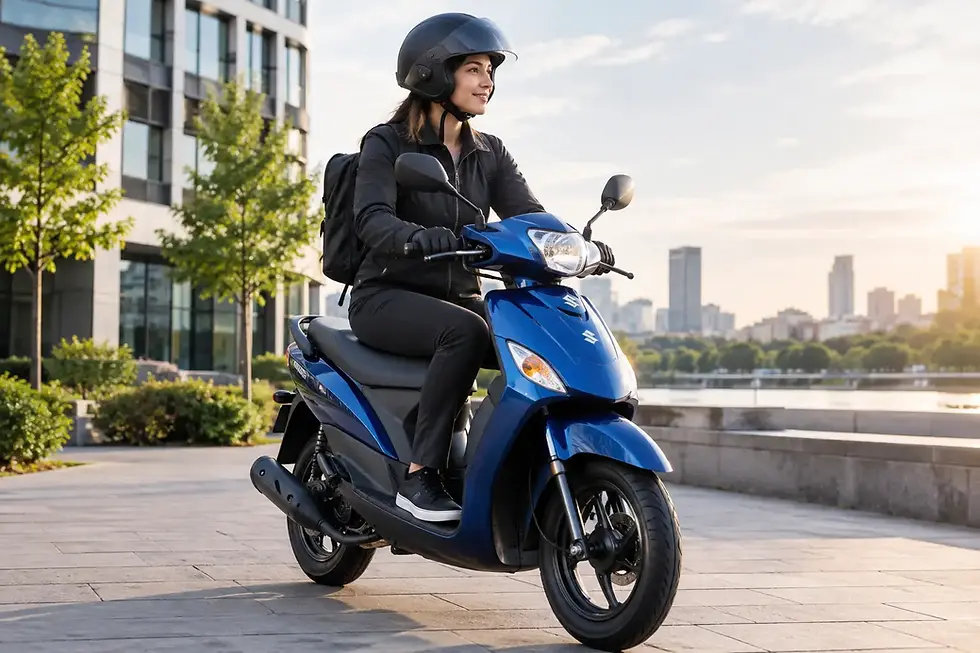
Petrol scooters have more traditional character. You will hear the engine and feel more mechanical feedback, which some riders prefer. They remain easy to operate and highly capable in urban conditions, particularly when you need to carry a backpack, food deliveries or a passenger within the scooter's approved limits.
Both types are compact, easy to park and much less stressful to manoeuvre than a car in busy inner-city areas. Comfort depends more on the individual scooter's seating position, suspension, wheel size and storage than on whether it runs on petrol or electricity. Take your expected riding conditions seriously: smooth city streets, tram-track areas, wet roads and longer arterial routes all feel different on a scooter.
Maintenance and Downtime
Petrol scooters need regular servicing for engine oil, filters, spark plugs and other mechanical components. This is normal and manageable, but it is part of the ownership cost. A well-maintained petrol scooter is dependable, but skipping services can create expensive problems later.
Electric scooters have fewer routine engine-related maintenance needs. However, they still need tyre checks, brake servicing, suspension inspections and general safety checks. Batteries also age over time, and battery replacement can be a major expense depending on the model and arrangement.
For riders using a scooter to earn money, downtime is the real enemy. If you are delivering food or travelling to work, a vehicle off the road can mean lost income. This is where support matters. Skootify Australia can make scooter access simpler by bundling practical essentials such as maintenance, registration, CTP insurance, roadside assistance and emergency support into a flexible rental solution.
Which Scooter Suits Your Day?
A petrol scooter is often the better fit if you travel long or variable distances, do delivery work, cannot charge securely where you park, or want the reassurance of fast refuelling anywhere. It is a practical choice when every day looks different.
An electric scooter can be the smarter option if your rides are shorter and predictable, you have easy overnight charging and reducing day-to-day energy costs is a priority. It can be particularly appealing for regular local commuting where quiet operation and lower running costs outweigh the need for maximum range.
Also consider your riding eligibility, licence requirements and the scooter's specifications before booking or buying. Rules can differ depending on the vehicle type and power output, so check current Victorian requirements and make sure the scooter matches what you are legally permitted to ride.
The right scooter is the one that is ready when you are. Map out a normal week, including work, errands, social trips and unexpected detours. If charging fits naturally into that routine, electric may save you money. If your work and travel change by the hour, petrol can keep you moving without a second thought.

Comments