


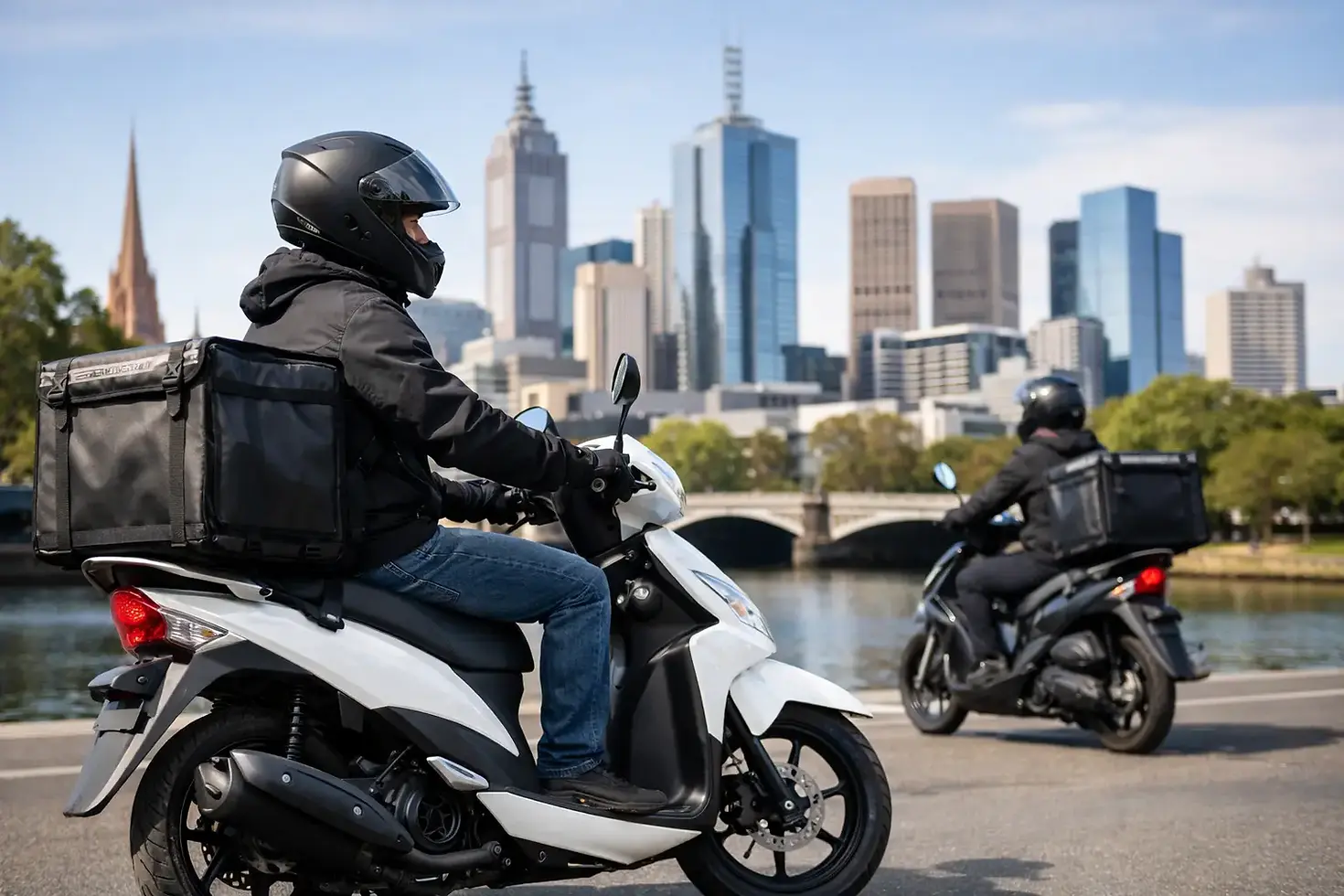
How to Start Delivery Riding in Melbourne
- Skootify Australia
- Jun 16
- 6 min read

Friday dinner rush is coming, your app is pinging, and every minute off the road is money gone. That is why knowing how to start delivery riding properly matters. If you get the setup right from day one, you spend less time fixing problems and more time actually earning.
For plenty of riders, delivery work is the fastest way to turn a scooter or motorbike into income. It suits students, side hustlers, new arrivals, and anyone who wants flexible work without the cost of running a car. It can also go wrong quickly if you jump in without thinking about licence rules, vehicle choice, insurance, and what your daily costs will actually look like.
How to start delivery riding without wasting money
The biggest mistake new riders make is treating delivery work like ordinary commuting. It is not the same. You are stopping and starting all day, parking constantly, riding in traffic, watching your app for jobs, and putting more wear on the bike than most people expect.
That is why your first decision should be practical, not flashy. A delivery bike needs to be cheap to run, easy to park, fuel efficient, and reliable. In busy areas, a smaller scooter or light motorbike often makes more sense than a larger machine because it is easier to handle, easier to squeeze into tight parking spots, and cheaper to keep on the road.
If you do not already own a suitable bike, buying one outright is not your only option. Renting can make more sense when you are testing whether delivery work suits you, especially if maintenance, registration, roadside support, and basic extras are bundled in. That can save a lot of upfront stress.
Start with the legal basics
Before you accept a single job, make sure you can ride legally. In Victoria, that means having the correct motorcycle licence or learner permit for the bike you are using and understanding any restrictions that apply. If you are new to riding, do not rush this step. Delivery riding adds pressure, and pressure exposes weak skills fast.
You also need to check that your registration is current and that you understand what insurance cover you have. Many riders assume standard cover is enough, then realise too late that using a bike for delivery work can change what is and is not included. It is worth reading the details rather than guessing.
If your bike is not roadworthy, stop there and sort it out first. Tyres, brakes, lights, mirrors and indicators are not minor details when your whole income depends on staying mobile and staying safe.
Pick a bike that suits delivery work
There is a reason scooters are common in delivery jobs. They are cheap to run, simple to park, and efficient in stop-start urban traffic. For riders working around Melbourne’s inner suburbs or busy local strips, that convenience adds up every shift.
That said, the right choice depends on where and how you plan to work. If your delivery area is mostly short metro trips, a scooter is often the smart play. If you expect longer distances or higher-speed roads, a motorbike may be the better fit. The trade-off is usually cost, fuel use, and ease of handling.
A good delivery bike does not need to impress anyone. It needs to start every day, sip fuel, carry what you need, and stay out of the workshop. Reliability beats style every time.
Set the bike up for the job
Once you have the bike, you need to make it work for delivery. That starts with a secure mobile holder. You will be checking maps and job notifications all day, so the mobile needs to be visible without becoming a distraction or a hazard. A dead battery halfway through a shift is also a problem, so think about charging options early.
Helmet quality matters too. If you are riding for hours, comfort is not a luxury. It affects concentration. Gloves, a decent jacket, and weather-ready gear matter more than most beginners think, especially when Melbourne decides to deliver four seasons in one day.
Storage is another practical issue. Some riders start with a backpack, but that gets uncomfortable quickly and can affect balance. A proper rear box or delivery setup is usually better if you are serious about regular work. It is more stable, easier on your body, and generally better for carrying food securely.
Understand your costs before you chase income
A lot of people ask how much they can earn. Fair question, but the more useful question is how much you keep. Delivery riding can look good on paper until fuel, bike costs, repairs, tyres, servicing, mobile data, and downtime start eating into your margin.
That is why low running costs matter so much. A fuel-efficient scooter or small motorbike can make the numbers work far better than a larger bike with higher fuel use and higher maintenance costs. If your goal is flexible income, the cheapest vehicle to operate is often the smartest one.
It also helps to be realistic about slow periods. Not every hour is a busy hour, and not every day will pay the same. Weekend nights might be strong. Mid-afternoons might not. Planning around actual demand is part of making delivery work worthwhile.
Learn the rhythm before you rely on the money
If you are just getting started, give yourself a trial period. Work a few shifts, learn the app flow, test your stamina, and figure out which areas feel efficient rather than chaotic. There is a difference between being busy and being profitable.
Some riders do well sticking to dense local zones with lots of short trips. Others prefer working around meal peaks only, rather than spending long quiet stretches waiting around. It depends on your area, your vehicle, and how far you need to travel between jobs.
This is where convenience matters. If your transport setup is simple and low-hassle, you can switch on and work when it suits you instead of committing to big fixed costs every week. That flexibility is a major reason many riders start with rental rather than ownership.
Safety is not optional in delivery riding
Speed feels profitable right up until it costs you a job, a bike, or your health. Delivery work rewards consistency more than reckless riding. The riders who last are usually the ones who stay alert, plan ahead, and avoid silly risks.
That means giving yourself extra braking room, staying visible, watching for car doors, and not assuming every driver has seen you. Wet roads, tram lines, potholes, and rushed lane changes are everyday hazards in metro riding. If you are riding tired or stressed, the risk climbs fast.
Mobile distraction is one of the biggest issues for new delivery riders. Set up your navigation on your mobile before you move. Pull over safely if you need to check something properly. Losing 30 seconds is better than losing control.
What makes delivery riding easier day to day
The best setup is the one that removes friction. Registration sorted, maintenance handled, roadside help available, proper helmet, mobile holder, and a reliable bike - those things matter because every interruption costs time and money.
That is also why bundled rental solutions appeal to a lot of new riders. If you are trying to work out how to start delivery riding, the easiest path is often the one that gets you onto the road without a huge upfront spend or a list of admin jobs. For riders in Melbourne and Geelong, businesses like Skootify Australia are built around that exact need: affordable scooters and motorbikes with the practical extras already covered.
You still need to ride smart and manage your shifts well, but removing the usual ownership hassles can make starting much more realistic.
How to know if you are ready to begin
You are ready when the basics are sorted and you are not relying on luck. That means you can ride confidently, your vehicle is suitable, your legal requirements are covered, your gear is decent, and you have a clear idea of what your weekly costs will be.
You do not need the perfect setup to begin. You do need a sensible one. Start lean, keep your costs under control, and pay attention to what actually helps you earn more efficiently. Usually it is not a bigger bike or fancier gear. It is reliability, low fuel use, easy parking, and fewer interruptions.
Delivery riding can be a smart way to earn, especially if you need flexibility and want a cheaper alternative to running a car. But the riders who do best are not the ones who jump in blindly. They are the ones who start with a setup that is easy to run, easy to manage, and ready for real work from the first shift.
If you are thinking about getting started, keep it simple. Pick the bike that makes the job easier, not harder, and let convenience do more of the heavy lifting.


Comments