


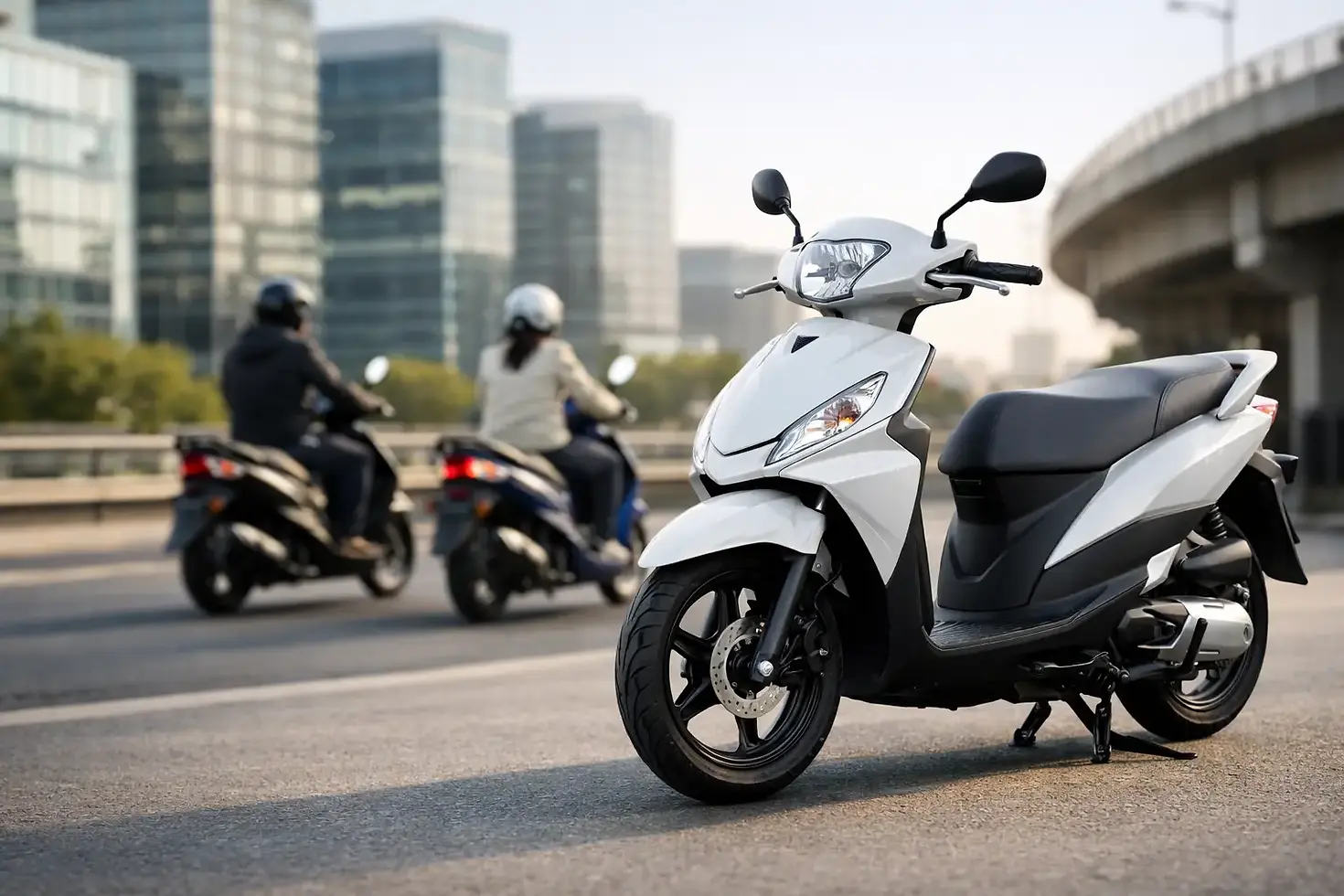
Fuel Efficient Commuter Scooter Guide

If you are spending too much on petrol, parking, Myki top-ups or rideshare trips, a fuel efficient commuter scooter starts making sense very quickly. For a lot of Melbourne and Geelong riders, the big win is not just lower fuel use - it is getting a practical way to move around without the cost and hassle that usually comes with a car.
That matters most when your travel is repetitive. Home to work, work to uni, uni to a shift, then back again. If your week is built around short to medium urban trips, the right scooter can turn transport from a constant expense into something manageable.
Why a fuel efficient commuter scooter works so well
A scooter suits commuting because city travel is rarely about speed alone. It is about stop-start traffic, finding a park, squeezing travel into a busy day, and keeping costs under control. Cars burn more fuel sitting in traffic, cost more to run, and can turn a simple trip into a parking headache. Public transport can work, but it does not always get you door to door, and it definitely does not run on your schedule.
A commuter scooter sits in the sweet spot. It uses far less fuel than a car, is easy to park, and makes short urban runs straightforward. If you are travelling across inner and middle-ring suburbs, that convenience adds up fast.
There is also the mental side of it. A simpler trip to work can remove a surprising amount of stress from your day. No circling for a park, no waiting on delayed services, no big weekly fuel bill. You just get on, ride, park and move on.
What actually makes a scooter fuel efficient
Not every scooter is equally cheap to run, even though most will beat a car on fuel. Efficiency usually comes down to a few practical factors.
Engine size is the obvious one. Smaller-capacity scooters generally use less fuel, especially for urban riding. For daily commuting, many riders do not need a large engine. If your travel is mostly suburban roads, local shopping strips, train-station connections or delivery routes, a smaller scooter often makes more financial sense than a bigger one.
Weight matters too. A lighter scooter usually needs less fuel to move, and it is often easier to handle in traffic or when parking. That can be especially useful for new riders, students, or anyone who wants transport that feels easy rather than intimidating.
Then there is riding style. Even the most fuel efficient commuter scooter will use more petrol if it is ridden aggressively. Hard acceleration, unnecessary braking and carrying extra load all chip away at economy. Smooth riding usually saves fuel and makes the trip more comfortable as well.
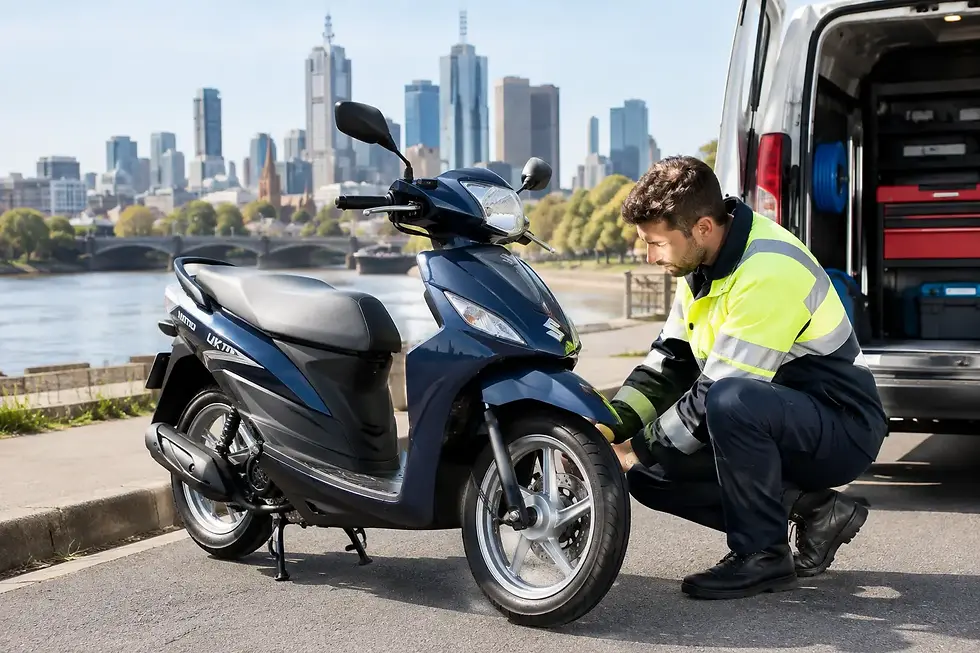
Maintenance also plays a part. Tyre pressure, engine health and general servicing affect efficiency. A scooter that is looked after properly will usually run cleaner, smoother and cheaper than one that is neglected.
Choosing the right scooter for your commute
The best scooter is not the one with the biggest spec sheet. It is the one that fits your daily routine.
If your commute is mostly local and urban, a smaller scooter can be ideal. It is cheaper to run, easier to park and less effort in traffic. If you need to cover longer suburban stretches or carry gear more regularly, you may need a bit more power, but there is a balance. Going larger than you need can mean higher fuel use without much real-world benefit.
Think about your route honestly. Are you mostly doing short city trips, or are you crossing larger arterial roads every day? Do you need to carry a backpack only, or work gear as well? Are you commuting five days a week, or using the scooter casually when public transport is inconvenient? Those details matter more than hype.
Comfort counts too. A scooter can be fuel efficient, but if the riding position feels cramped or the storage does not suit your day, it may not be the right commuter choice. You want something economical, but you also want something you will actually enjoy using every day.
The cost difference is bigger than most people expect
A lot of people compare scooters and cars only on the purchase price, which misses the real story. The bigger difference shows up in ongoing costs.
Fuel is the obvious saving. A scooter uses far less petrol than a typical car, especially in stop-start urban traffic. But there are other savings that matter just as much. Parking is usually easier and often cheaper. General wear costs are lower. For many riders, the total weekly transport spend drops in a way that feels immediate, not theoretical.
That is why scooters appeal to such a wide range of people - commuters, students, casual workers, international residents, and delivery riders. When money is tight, predictable low running costs make a real difference.
There is a trade-off, though. A scooter is fantastic for one person getting around efficiently, but it will not replace a car for every job. If you regularly move large loads, drive family members around, or do long highway trips, a scooter may be a second transport solution rather than the only one. For urban commuting, though, it is often the more sensible choice.
Fuel efficient commuter scooter or public transport?
This depends on how you travel. If your whole trip lines up neatly with trains or trams, public transport can still be convenient. But many daily routes are not that neat.
The problem is usually time and flexibility. Walking to a stop, waiting, changing services, then walking again can turn a short trip into a long one. If you finish late, start early, work shifts or move between suburbs, the system may not suit your day.
A scooter gives you direct travel. You leave when you are ready, park closer to where you need to be, and avoid the hidden dead time built into public transport. For workers with changing rosters or gig economy riders who need to stay mobile, that freedom is hard to beat.
Why renting can make more sense than buying
This is where plenty of people get stuck. They know a scooter could save them money, but they are not ready to buy one outright. That is fair. Ownership comes with upfront cost, registration, insurance, maintenance and the hassle of sorting out issues when something goes wrong.
Renting removes a lot of that friction. For someone who wants a fuel efficient commuter scooter now, renting can be the fastest way to get moving without a major financial commitment. It is especially useful if you have just moved, are studying, are building savings, or need transport for work straight away.
It also gives you flexibility. You can use a scooter for commuting, casual travel or delivery work without carrying all the ownership admin yourself. If convenience matters as much as cost, bundled support starts to look very attractive.
That is one reason scooter rental works well in places like Melbourne, where parking pressure, traffic and transport costs are all part of daily life. A service-driven option such as Skootify Australia makes that even easier by combining the scooter with registration, CTP insurance, maintenance, roadside assistance, helmet provision and support. For a lot of riders, that is exactly the kind of low-hassle setup they are after.
Who gets the most value from this kind of transport?
The short answer is anyone doing regular urban travel who wants to spend less and move faster.
Office workers benefit because commuting becomes cheaper and easier to park. Students benefit because weekly travel costs stay lower. Delivery riders and restaurant operators benefit because fuel economy and manoeuvrability directly affect operating costs. International residents often benefit because renting is simpler than buying a vehicle straight away and dealing with all the extras.
Even casual riders can get strong value if they are relying too heavily on rideshare or inconsistent public transport. Once the numbers are added up, a scooter often looks less like a luxury and more like the practical option.
What to look for before you commit
The smartest move is to focus on total usability, not just fuel economy on paper. Ask whether the scooter suits your route, your comfort level and your budget. Consider what support is included if you are renting. Check whether maintenance and emergency help are covered. Think about how quickly you need transport and how much hassle you are willing to deal with.
This is where a lot of people overcomplicate things. If the goal is affordable, reliable commuting, the best option is usually the one that gets you riding quickly, keeps weekly costs clear, and does not dump extra admin on your plate.
A fuel efficient commuter scooter is not about making a dramatic lifestyle statement. It is about making daily travel cheaper, easier and less annoying. If your current routine feels expensive, slow or frustrating, that is usually the sign you are ready for a better setup.
The best transport choice is the one you will actually use with confidence every day - and if that means less time stuck in traffic and more money left in your account, it is worth taking seriously.


Comments