


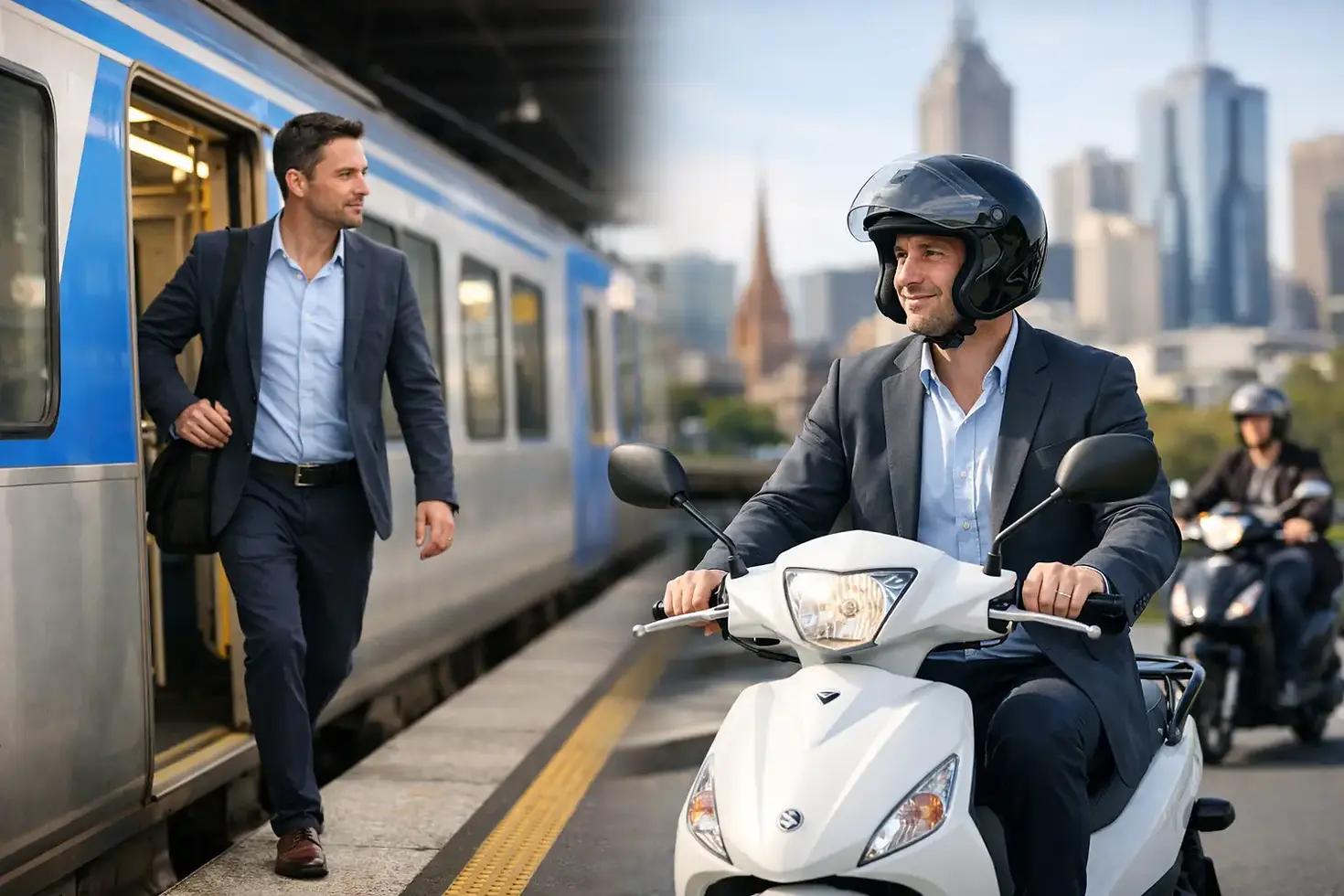
A Real Melbourne Commuter Switching From Train Example

The 7:42am train is cancelled, the platform is packed, and you are already doing the maths on whether you will make your 9am start. If you are searching for a commuter switching from train example, this is what that change can look like for a Melbourne worker who wants a more direct, flexible way to get around without buying a car.
This is not about pretending a scooter suits every trip. Trains are still useful for long distances, bad weather and days when you simply do not want to ride. But for commuters travelling through suburbs, changing lines, or losing too much time getting to and from a station, a scooter or small motorbike rental can turn a frustrating daily routine into a simpler one.
A commuter switching from train example in Melbourne
Meet Sam, who lives in Clayton and works near South Melbourne. Sam’s train commute involves a bus or lift to the station, a train into the city, then a tram or a 15-minute walk at the other end. On a good day, door to door takes about 70 minutes. On a day with delays, missed connections or rain, it can easily stretch past 90 minutes.
Sam does not want the cost, parking stress or maintenance bills that come with owning a car. Instead, Sam rents a scooter for weekday commuting. The route is roughly 18 kilometres each way, mainly on suburban roads. With traffic conditions, safe riding and parking time factored in, the trip may take around 35 to 45 minutes.
The biggest win is not just the time on the road. It is removing the awkward gaps: waiting for a bus, checking cancellation notices, racing for a connection, then walking from the final stop. Sam leaves when ready, parks close to work where permitted, and heads home without planning around a timetable.
That extra control matters when shifts change, meetings run late or you need to pick up groceries on the way back. It can also be handy if the same vehicle is used for casual delivery work outside normal hours, provided the rental arrangement and insurance cover that use.
What changes when you leave the train routine?
A scooter does not make traffic disappear. Melbourne roads can still be busy, weather can be rough, and safe riding needs your full attention. What it does change is the structure of the journey. Instead of travelling station to station, you can travel door to door.
For many commuters, that means fewer daily compromises. You are not limited to homes within easy walking distance of a station. You do not need to find a car park at the station before the good spots disappear. And if your workplace is in an area with limited public transport connections, you are not adding another mode of travel to either end of the trip.
Parking is another practical difference. A small scooter takes far less space than a car and can be easier to place near your destination, as long as you follow local rules, signs and designated parking requirements. Always check where motorcycles and scooters can legally park before you ride in.
There is also the simple benefit of having transport available when public transport is not the best option. A late finish in Footscray, an early shift in Dandenong, or an appointment that sits nowhere near a station becomes easier to manage.
The cost question: compare the whole trip
A train fare can look cheaper than renting a vehicle if you only compare the ticket price against the rental price. That is not the full picture. The right comparison includes the costs and value that matter to your actual routine: public transport fares, rideshares to the station, occasional taxis after late shifts, fuel, parking, travel time and the cost of owning a car you may barely use.
With a rental scooter, ask exactly what is included before committing. A good arrangement can bundle registration, CTP insurance, maintenance, roadside assistance, a helmet and phone holder. Those inclusions are important because they reduce surprise costs and save you from organising separate services.
Fuel is usually a key reason commuters consider a scooter. Smaller-capacity scooters are generally very fuel efficient compared with cars, especially for regular urban travel. Your real spend depends on the model, how far you ride, current fuel prices and your riding style, so it is worth estimating your weekly kilometres rather than relying on a vague promise of savings.
Sam’s decision is not that a scooter is automatically cheaper in every possible situation. It is that the weekly rental and fuel cost feel worthwhile when balanced against a more predictable commute, fewer last-minute rideshares and no car ownership burden. If Sam only travelled to the office once a week from next to a station, the train might remain the better-value option.
Check these practical details before renting
Before making the switch, make sure you are eligible to ride the vehicle you choose. In Victoria, scooters and motorbikes require the appropriate motorcycle licence or learner permit. licence rules, vehicle categories and learner conditions matter, so check your current eligibility before booking rather than assuming a car licence is enough.
Think honestly about your route too. A rider who is comfortable on local roads may not feel comfortable with a long freeway section, heavy truck traffic or a complicated CBD route. Start with a route you know, allow extra time for the first few rides, and avoid trying to make up time by rushing.
Weather deserves a proper plan. Melbourne can give you sunshine, wind and rain in the same commute. Keep wet-weather gear with you, use a secure bag for work essentials, and be prepared to take public transport on days when conditions are unsafe or you are not confident riding. Flexibility is the point - you do not need to prove you can ride through every storm.
Security is worth considering as well. Ask where your workplace allows scooter parking, whether there is a covered area, and what locking or security measures are recommended for the vehicle. At home, make sure you have a lawful, practical place to park it overnight.
Renting makes sense when ownership does not
Buying a scooter can be a great choice for a confident long-term rider, but it comes with upfront cost and ongoing responsibilities. You organise registration, insurance, servicing, repairs and the inevitable moment something needs attention when you are busy.
Rental is a practical middle ground for someone who needs transport now but does not want to be locked into ownership. It can suit students, international residents, people testing a new commute, workers on changing rosters and anyone rebuilding their budget after a big move.
At Skootify Australia, the appeal is straightforward: get a scooter or motorbike delivered, ride with support behind you, and avoid the usual ownership admin. Depending on the rental option, customers can access maintenance, roadside assistance and emergency support without spending their weekends chasing mechanics.
For people who want ownership eventually, rent-to-own may be worth asking about. It gives you a way to get mobile first while working towards a vehicle of your own. The important part is choosing an arrangement that matches how often you ride, how long you expect to need it and whether your work plans could change.
Is switching from the train right for you?
The train is hard to beat when your home and workplace sit neatly on the same line, your commute is short, and you do not need to travel elsewhere during the day. It is also often the sensible call when weather is poor or you are new to riding.
A scooter becomes more compelling when the train journey involves multiple connections, unreliable last-mile travel, late finishes or a workplace outside easy public transport reach. It can be especially useful for commuters who value arriving on their own schedule more than following one.
Try mapping your actual week, not an ideal one. Include the early starts, the late finishes, the supermarket stop, the gym visit and the days you need to be somewhere other than your office. That is where a commuter transport decision becomes clear. The best option is the one that gives you a realistic, affordable way to keep moving when your day refuses to stick to a timetable.

Comments