


10 Best Scooters for Commuters

Peak-hour traffic has a way of making a short trip feel ridiculous. If you are crawling through packed streets, circling for parking, or spending too much on trains, rideshares or petrol, the best scooters for commuters start to make a lot of sense. They are cheap to run, easy to park, and quick enough for the kind of daily travel most people actually do.
Not every scooter suits every rider, though. A student doing a 6 km run to class needs something different from a hospitality worker finishing late at night, or a delivery rider putting in serious hours across Melbourne. The smart move is not chasing the flashiest model. It is choosing the scooter that fits your route, your budget and how much comfort you want from Monday to Friday.
What makes the best scooters for commuters?
For commuting, the basics matter more than bragging rights. A good commuter scooter should be light enough to handle easily, strong on fuel economy, comfortable for stop-start riding, and practical enough to carry your everyday gear. You do not need huge power if most of your riding is in built-up areas. You need reliability, easy parking and low weekly costs.
Seat height matters more than many first-time riders expect. If you are hopping on and off all day or riding in busy traffic, a scooter that feels easy to balance at lights will make daily use less stressful. Under-seat storage is another big one. Being able to stash a helmet, rain jacket or small bag saves hassle.
Then there is wheel size. Smaller wheels can feel nimble in city streets and are great for tight manoeuvring, but larger wheels usually give a smoother ride over rough roads, tram tracks and potholes. If your commute includes older streets or patchy suburban roads, that difference is worth noticing.
10 of the best scooters for commuters
1. Honda Dio
The Honda Dio is a classic entry-level commuter option. It is light, simple and easy to live with, which makes it a strong choice for students, new riders and anyone who wants a basic point-A-to-B machine. Running costs are low, and Honda’s reputation for reliability is a big part of the appeal.
The trade-off is that it is not built for speed or long freeway stretches. If your commute is mostly local roads, shopping strips and suburban runs, it fits the job well.
2. Honda PCX 125 or 150
The PCX has earned its place on commuter shortlists because it strikes a nice balance between comfort, fuel economy and everyday polish. It feels more substantial than many small scooters without becoming bulky. The seat is comfortable, storage is useful, and it handles daily city work with very little fuss.
If you want a scooter that feels practical but not bare-bones, this is often the sweet spot. It suits riders who want more comfort for longer suburban commutes without stepping into oversized territory.
3. Yamaha NMAX 155
The Yamaha NMAX 155 is one of the best scooters for commuters who want a bit more punch without losing day-to-day practicality. It is popular for a reason. It has enough power for faster roads, but it still feels manageable in traffic and easy to park.
It also tends to suit riders who are commuting more than just a few kilometres at a time. If your ride mixes inner-city traffic with stretches through larger arterial roads, the NMAX is a very sensible option.
4. Suzuki Address 110
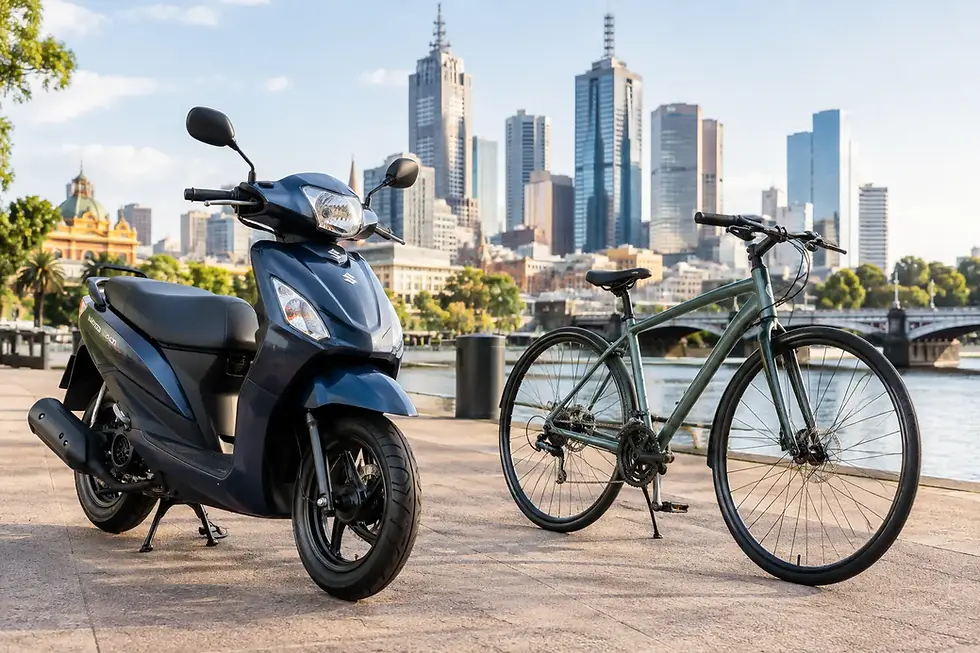
The Suzuki Address 110 is all about low-cost, no-drama commuting. It is compact, economical and friendly for newer riders. If your top priorities are fuel savings and easy handling, it deserves a look.
What you give up is a more planted, premium feel compared with larger scooters. But for short daily trips, quick errands and urban commuting, that simplicity is often the whole point.
5. Vespa Primavera 150
The Vespa Primavera 150 brings a bit more style into the conversation, but it is not just about looks. It is compact, practical and genuinely useful for everyday commuting. For riders who want something with personality without sacrificing city convenience, it stands out.
It will usually cost more than more basic commuter scooters, and that matters if your decision is purely budget-driven. But if you care about design, build quality and ease of use, it can justify the extra spend.
6. Kymco Like 125
Kymco often flies under the radar, which is a shame because the Like 125 is a solid urban commuter. It offers approachable handling, decent comfort and good value, especially for riders who want something practical without paying for a big-name badge.
It is a good middle-ground choice. Not too basic, not too expensive, and easy to ride in dense traffic.
7. SYM Jet 14
The SYM Jet 14 is a strong option for riders who want larger wheels and a bit more road confidence. That bigger-wheel setup can help the scooter feel calmer over rough surfaces, making it handy for mixed suburban and inner-city routes.
If your commute includes unpredictable roads, speed humps and plenty of stop-start sections, that extra stability can make daily riding feel easier.
8. Piaggio Liberty 150
The Piaggio Liberty 150 is another smart commuter choice, especially if comfort and ride quality matter to you. It has a practical layout and tends to suit riders who want something easy in traffic but not too tiny underneath them.
It is especially well suited to people who commute often enough to notice little things like seating comfort and road feel. Those details start to matter when you ride five or six days a week.
9. Honda ADV160
If your idea of commuting includes rougher streets, wet weather confidence and a more upright riding position, the Honda ADV160 is worth serious attention. It leans into scooter practicality but adds a bit more toughness and versatility.
This is probably more scooter than some city-only riders need, and it will cost more than smaller commuter options. But if you want comfort, extra presence on the road and better performance across mixed conditions, it makes a lot of sense.
10. Yamaha XMAX 300
For longer commuters, the Yamaha XMAX 300 sits at the bigger end of the scale. It offers strong comfort, more power and a more substantial ride feel, making it suitable for people covering bigger distances or spending regular time on faster roads.
The downside is obvious. It is heavier, pricier and less nimble than smaller scooters in tight city spaces. But for riders who are almost replacing a car for daily travel, the extra comfort can be worth it.
How to choose the best scooter for your commute
Start with your route, not the spec sheet. If you are mainly riding through local streets, a small 110cc to 125cc scooter may be all you need. It keeps costs down, parking easy and handling simple. If your trip includes longer suburban stretches or faster roads, stepping up to 150cc or above can make the ride more relaxed.
Think honestly about carrying capacity too. Do you need room for a backpack, groceries or work gear? Are you commuting in all weather, or mostly on clear days? A scooter that looks great online can become annoying fast if it lacks storage or leaves you cramped after 20 minutes.
Budget also needs a real-world view. Purchase price matters, but so do registration, insurance, servicing and gear. That is one reason rental can be appealing for commuters who want immediate transport without the upfront hit. For plenty of riders in Melbourne and Geelong, having maintenance, roadside support and the essentials bundled in can remove a lot of friction.
Best scooters for commuters on a budget
If keeping weekly costs low is your main goal, smaller scooters usually win. Models like the Honda Dio, Suzuki Address 110 and Kymco Like 125 are popular because they are cheap to run, easy on fuel and simple to manage. For short to medium trips, they cover the basics very well.
That said, the cheapest option is not always the best value. If a slightly larger scooter gives you more comfort and confidence, you are more likely to keep riding it every day instead of defaulting back to trains, Ubers or borrowing the car. A scooter only saves you money if it actually works for your lifestyle.
A lot of commuters do not want the headache of ownership straight away. That is fair enough. Buying means upfront cost, rego, insurance, servicing and repairs all landing on you. Renting can be a cleaner option if you need transport now, want flexibility, or are still figuring out what kind of scooter suits your daily routine.
For new riders especially, renting gives you a practical way to test whether scooter commuting fits your week before committing long term. If the service includes maintenance, roadside assistance, helmet provision and vehicle delivery, it becomes less about owning a scooter and more about getting a reliable transport solution that is ready to go. That is exactly why services like Skootify Australia appeal to commuters who want a cheap, flexible way to get moving without the usual hassle.
The best commuter scooter is the one that makes your day easier the moment you turn the key. If it saves you time, cuts your travel costs and takes the stress out of getting around, you are on the right track.

Comments