


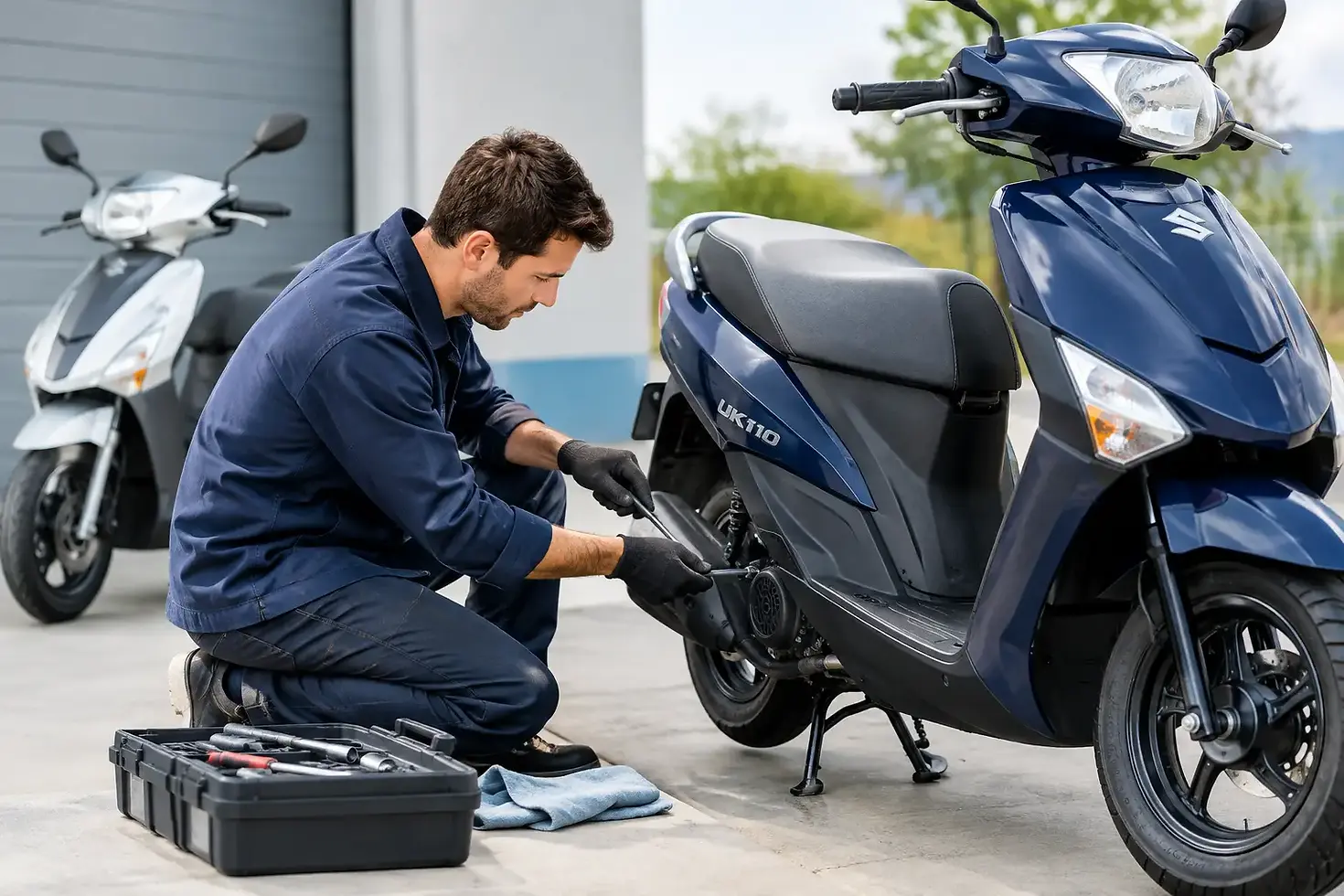
Guide to Mobile Scooter Maintenance for Riders

A scooter that will not start outside your shift, feels vague through a corner or struggles to stop in wet traffic can turn a cheap commute into a costly headache. This guide to mobile scooter maintenance focuses on the simple checks that protect your ride, your safety and your wallet - whether you use a scooter for daily travel, food delivery or both.
You do not need to be a mechanic to spot most issues early. A few minutes before riding, plus regular professional servicing, helps prevent breakdowns and keeps the scooter efficient. That matters when you rely on two wheels to get around Melbourne's traffic, find easy parking and keep earning.
Start with the checks that matter every ride
Before heading off, walk around the scooter and look for anything out of place. Check the tyres are not flat, damaged or visibly worn. Look underneath for fresh oil, fuel or coolant leaks. Make sure your mirrors are clean and positioned properly, and test that the horn, indicators, brake light and headlight are working.
Tyres deserve extra attention. They are the only part of the scooter touching the road, and low pressure affects braking, cornering, fuel use and tyre life. Check pressures when the tyres are cold, using the figures on the scooter's tyre-pressure label or in its handbook. Do not guess based on how the tyre looks. A tyre can be underinflated without appearing flat.
For riders carrying a delivery bag or regularly transporting heavier loads, tyre pressure and tyre condition become even more critical. Extra weight changes how the scooter handles and increases stopping distance. Keep loads secure, stay within the scooter's stated capacity and allow more room in wet weather.
Mobile scooter maintenance essentials
Mobile scooter maintenance means keeping on top of small jobs wherever your scooter is parked, while knowing when to bring in a technician. Your daily routine should be quick. Professional servicing should be planned, not delayed until something fails.
Oil and fluids
Engine oil keeps moving parts lubricated and helps manage heat. Check the oil level on level ground, following the method specified for your model. Some scooters use a dipstick, while others have a sight glass. Overfilling is not a fix for low oil, so add only the recommended oil in small amounts if your handbook allows it.
A low oil level, dirty oil, burning smell or new engine noise needs attention. Do not keep riding and hope it settles down. Skipping oil changes can lead to expensive engine damage that far outweighs the cost of a routine service.
If your scooter is liquid-cooled, check coolant only when the engine is cold. Never open a hot cooling system. Brake fluid should sit within the marked range, but low fluid or a spongy brake lever is a job for a qualified mechanic. Brakes are not the place for trial-and-error repairs.
Brakes, controls and suspension
Squeeze each brake lever before moving off. It should feel firm and progressive, not soft, sticky or so loose that it reaches the grip. Listen for scraping, squealing or grinding while braking. These can point to worn pads, contamination or another fault that needs inspection.
Check that the throttle turns freely and returns immediately when released. Look over visible cables and hoses for cracks, fraying or rubbing. If the scooter pulls to one side, bounces excessively, feels unstable or clunks over bumps, book an inspection. Potholes, kerbs and rough delivery routes can put more stress on tyres, wheels and suspension than riders realise.
Battery and electrical system
Scooter batteries often fail after sitting unused, particularly in colder months. If you ride daily, the charging system usually keeps the battery healthy. If the scooter will sit for more than a week or two, use a suitable smart charger where possible, or follow the storage advice in the handbook.
Slow cranking, dim lights, an intermittent dashboard or a clicking noise when starting can signal a weak battery. Check battery terminals for corrosion or looseness, but do not touch exposed wiring or attempt makeshift repairs. A blown fuse may be simple, but repeated fuse failures indicate an electrical issue that needs proper diagnosis.
Keep the drive system clean and serviced
Many automatic scooters use a CVT belt system rather than a chain. The belt, rollers and clutch sit behind a cover and need inspection at the manufacturer's service intervals. A slipping sensation, shuddering when taking off, rattling or reduced acceleration can mean the system needs attention.
If your scooter has a chain, keep it correctly lubricated and adjusted. A dry, rusty or overly loose chain wears quickly and can be dangerous. Clean it with products made for motorcycle chains, avoid getting lubricant on the rear tyre or brake disc, and have adjustment checked if you are unsure. Chain-driven scooters need this regular care; belt-driven models need scheduled workshop servicing instead.
Air filters matter too, especially for riders travelling through dusty worksites, wet roads or busy inner-city streets. A blocked filter can reduce performance and fuel economy. It may be tempting to clean or replace it yourself, but use the correct part and fitting method. A poorly seated filter can allow dirt into the engine.
Build a service schedule around how you ride
Kilometres are useful, but they are not the whole story. A scooter doing short stop-start trips around St Kilda, Footscray or the CBD may need attention sooner than one travelling longer, steadier routes. Delivery work also puts extra wear on brakes, tyres and drive components because of frequent starts, stops and loads.
Use your manufacturer's service schedule as the baseline, then be realistic about your riding. Keep a simple note on your mobile with service dates, odometer readings, tyre replacements and any recurring problems. This makes it easier to catch patterns and gives a mechanic useful information.
Four signs should move servicing to the top of your list:
A warning light that stays on after starting
New vibrations, rattles, smoke or fuel smells
Braking that feels weaker, uneven or spongy
A change in handling, steering or tyre wear
Do not wait for the next scheduled service if any of these appear. A quick inspection can prevent a roadside breakdown or a much bigger repair.
Washing and storage are part of maintenance
Keeping a scooter clean is not only about appearance. Washing off road grime makes it easier to notice leaks, loose fasteners and damaged panels. Use a gentle stream of water rather than a high-pressure blast around bearings, switches, electrical connections and seals. Let the scooter cool first, then dry the brake discs and test the brakes gently before returning to normal riding.
When parking, choose a stable, level surface where possible. Use the centre stand if your scooter has one and it is practical to do so. For longer storage, keep it sheltered, make sure the battery is cared for and avoid leaving old fuel sitting for months. Fuel can deteriorate and cause starting problems.
Rental scooters: know what you should report
With a rental, maintenance, registration, insurance and roadside support may be included, but riders still play a major role in preventing damage. Report a warning light, puncture, leak, unusual noise or starting issue as soon as you notice it. Continuing to ride with a fault can make a minor repair more serious and may leave you stranded at the worst time.
Do not fit unapproved accessories, alter wiring or attempt repairs on a rental scooter. Even a mobile holder needs to be fitted securely so it does not block your view of the instruments or interfere with steering. If a scooter needs service at your home or workplace, a mobile support option can save time and keep the process simple.
Skootify Australia is built around that practical approach: get on the road with a scooter that is maintained, supported and ready for everyday travel. Your part is straightforward - give the scooter a quick check, ride smoothly, report changes early and let qualified technicians handle the work that affects safety. That small routine keeps your transport cheap to run, easy to rely on and ready for tomorrow's ride.



Comments