


Best Transport for Gig Workers in Australia
- Skootify Australia
- Jun 9
- 6 min read

The dinner rush does not wait for parking, train delays or a car that costs too much to keep on the road. If you are doing delivery work, rideshare support, or any app-based job that depends on moving quickly, the best transport for gig workers is the option that keeps your costs low and your time productive.
That sounds simple, but the right answer depends on how you work. A scooter can be brilliant for food delivery in busy suburbs. A car makes more sense for some jobs, but it can chew through your earnings if you are not careful. An e-bike is cheap to run, yet range and weather can get in the way. The real question is not which vehicle looks best on paper. It is which one leaves you with more money at the end of the week.
What makes the best transport for gig workers?
Gig work is all about margins. You might make decent money over a shift, but fuel, maintenance, rego, insurance and downtime can quietly eat into it. The best transport option gives you three things at once - low running costs, reliable availability and enough flexibility to handle your usual work area.
Speed matters, but not in the way most people think. Top speed is rarely the issue for metro delivery work. What matters more is how quickly you can move between pickups and drop-offs, how easily you can park, and whether you can avoid wasting ten minutes circling a block for a space.
Convenience matters just as much. If your transport is off the road for repairs, if the paperwork is a mess, or if you need to outlay a huge amount upfront, your earning potential takes a hit before you even start.
Scooters and motorbikes: often the smartest fit
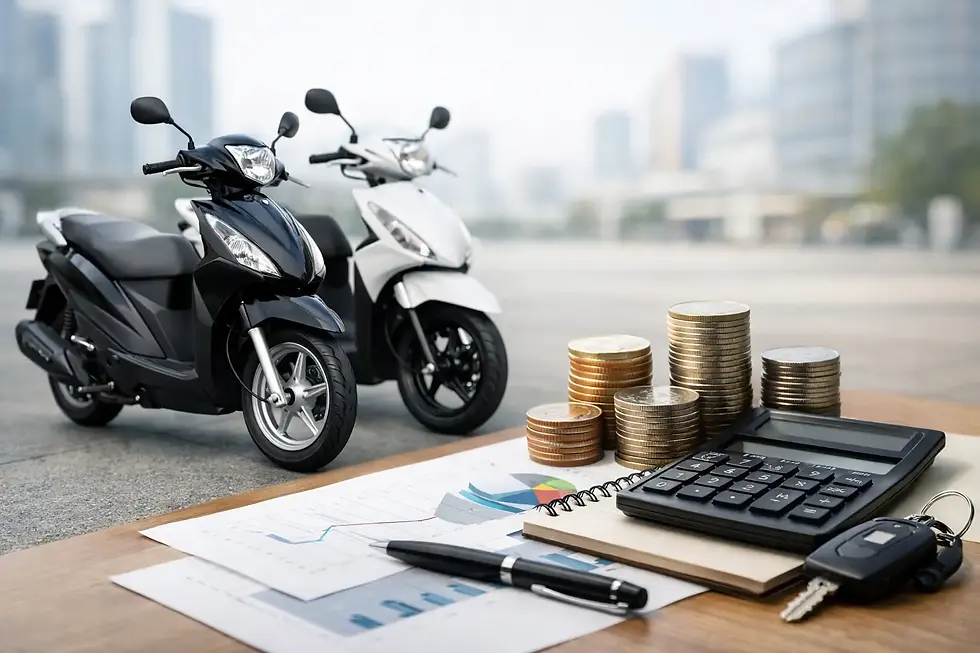
For many delivery riders, scooters and small motorbikes are the strongest option. They are cheap to run, easy to park and well suited to short, frequent trips through built-up areas. In places like Melbourne, South Melbourne, St Kilda or Footscray, that can make a genuine difference over a long shift.
Fuel efficiency is one of the biggest wins. A small scooter uses far less fuel than a car, which means more of each delivery fee stays in your pocket. Parking is another practical advantage. When every minute counts, being able to pull up quickly near a restaurant or apartment block helps you complete more jobs without the usual hassle.
There is also the lower barrier to entry compared with buying a car outright. For gig workers who need something now rather than six months from now, renting a scooter or motorbike can make more sense than tying up cash in a purchase. That is especially true if the rental includes rego, CTP insurance, maintenance, roadside assistance and the basics like a helmet and mobile holder. Those extras are not just nice to have. They remove the kind of admin and surprise costs that can throw off your week.
The trade-off is exposure to weather and a smaller carrying capacity. If you are doing mainly food delivery, that is usually manageable. If your work involves larger items or longer freeway runs, a scooter may be less ideal.
Are cars ever the best transport for gig workers?
Yes, but only for some gig workers and some jobs. If you are carrying passengers, transporting larger parcels, or working in outer suburbs with longer distances between jobs, a car can be the better tool. It offers weather protection, storage and broader job compatibility.
The problem is cost. Fuel is higher, parking is harder, servicing is pricier and insurance can sting. Once you add rego and depreciation, a car can become the most expensive way to earn modest delivery income. That does not mean cars are a bad option. It means they need enough income volume to justify their overheads.
Cars also lose time in dense urban areas. In a busy strip with constant pickups, the ability to stop, park and move off quickly often matters more than comfort. If most of your work is local delivery rather than long-haul driving, a car can feel like overkill.
E-bikes and bicycles: cheap, but not always practical
E-bikes and bicycles have obvious appeal for gig workers starting on a budget. They are very cheap to run, simple to park and ideal for short trips in compact areas. If you work close to the CBD or around inner suburbs with plenty of bike access, they can absolutely do the job.
But there are limits. Weather is a bigger issue, especially during colder Melbourne months. Range, battery charging and rider fatigue also matter more than many people expect. If you are working long shifts or covering mixed terrain, the physical side of cycling can start to affect your pace and reliability.
For some riders, an e-bike is a good entry point. For others, it becomes restrictive once they start taking on more hours and want a vehicle that can handle a fuller workweek.
Public transport and gig work do not mix well
For commuters, trains and trams can be fine. For gig workers, they are usually too limiting. You cannot control timing, you cannot carry much, and you cannot get door-to-door access for pickups and drop-offs. Public transport may help you get to a shift, but it is rarely the best transport for gig workers doing active delivery work.
That lack of control is the biggest issue. Gig work rewards responsiveness. If your transport does not move when you need it to, you lose jobs and waste time.
Cost matters more than the sticker price
A lot of gig workers compare transport options based on weekly rental or purchase price alone. That is only part of the story. What really matters is total cost of getting on the road and staying there.
A cheaper car can still become expensive once you pay for insurance, servicing, tyres, registration and surprise repairs. A scooter rental that bundles the essentials can end up being the simpler and more affordable option overall, especially if you need predictable weekly costs. That is why flexible rental can suit newer riders, students, international residents and anyone trying to keep cash flow under control.
The less time you spend sorting maintenance, breakdowns and paperwork, the more time you have to work. That is not a small detail. It is part of your earning equation.
How to choose the right option for your work style
Start with distance. If your jobs are short and frequent in busy suburbs, a scooter or motorbike is usually the strongest fit. If your work involves longer suburban routes or carrying more gear, a car may be worth the extra cost. If your delivery area is tight, flat and bike-friendly, an e-bike can work.
Then look at your shift pattern. Casual weekend work has different needs from full-time app driving. If you are doing this every day, reliability and low operating cost matter more than novelty. You want something that starts every morning, parks easily and does not turn every service into a financial setback.
Finally, think about how quickly you need to begin. Buying a vehicle takes time and money. Renting can get you working sooner, with less upfront pressure. For a lot of gig workers, that speed matters. Waiting around to sort transport can mean missed income.
Why rentals make sense for many delivery riders
If you need to be on the road fast, renting is often the practical move. You avoid the upfront spend, and you are not locked into ownership before you know what your work pattern looks like. That flexibility is valuable in gig work, where demand, hours and income can change.
A good rental setup should do more than hand over a vehicle. It should cut friction. When rego, CTP insurance, maintenance, roadside support and rider basics are already covered, there is less for you to chase. For delivery workers in Melbourne and Geelong, that kind of setup can be the difference between a transport solution and another problem to manage.
Skootify Australia is built around that reality. The goal is simple: easy to park, cheap to run and ready for work without the usual ownership hassle.
The best transport for gig workers comes down to earnings
There is no perfect vehicle for every gig worker. There is only the option that best matches your area, your job type and your weekly budget. For plenty of delivery riders, that points straight to a scooter or small motorbike because the numbers make sense and the day runs smoother.
If your transport helps you take more jobs, spend less on running costs and avoid downtime, it is doing its job. Pick the option that keeps you moving and leaves more of your pay where it belongs - with you.


Comments