


How Delivery Riders Rent Motorbikes

Friday night hits, the app lights up, and every minute off the road is money gone. That is exactly why so many riders look into how delivery riders rent motorbikes instead of buying one outright. For food delivery work, the right rental can get you earning faster, with less upfront cost and fewer surprise bills.
If you are delivering in busy areas, a motorbike or scooter is often the practical choice. It is cheaper to run than a car, easier to park, and far less painful in stop-start traffic. But not every rental setup is good value. The details matter - especially when your bike is your income source.
How delivery riders rent motorbikes in real life
Most delivery riders do not rent the same way holidaymakers do. They are not looking for a weekend booking or a flashy bike. They usually want something simple, reliable and ready to work this week, not next month.
In practice, riders usually start by choosing a rental period that matches how often they plan to deliver. Casual riders might want a short-term option so they can test whether delivery work suits them. Full-time riders usually lean towards weekly or longer-term rentals because the costs are easier to manage and the bike stays available when they need it.
The next step is checking what is actually included in the price. A cheap weekly number can look great until you realise registration, insurance, servicing or breakdown support are extra. For delivery work, that is a bad surprise. If the bike stops, your income stops too.
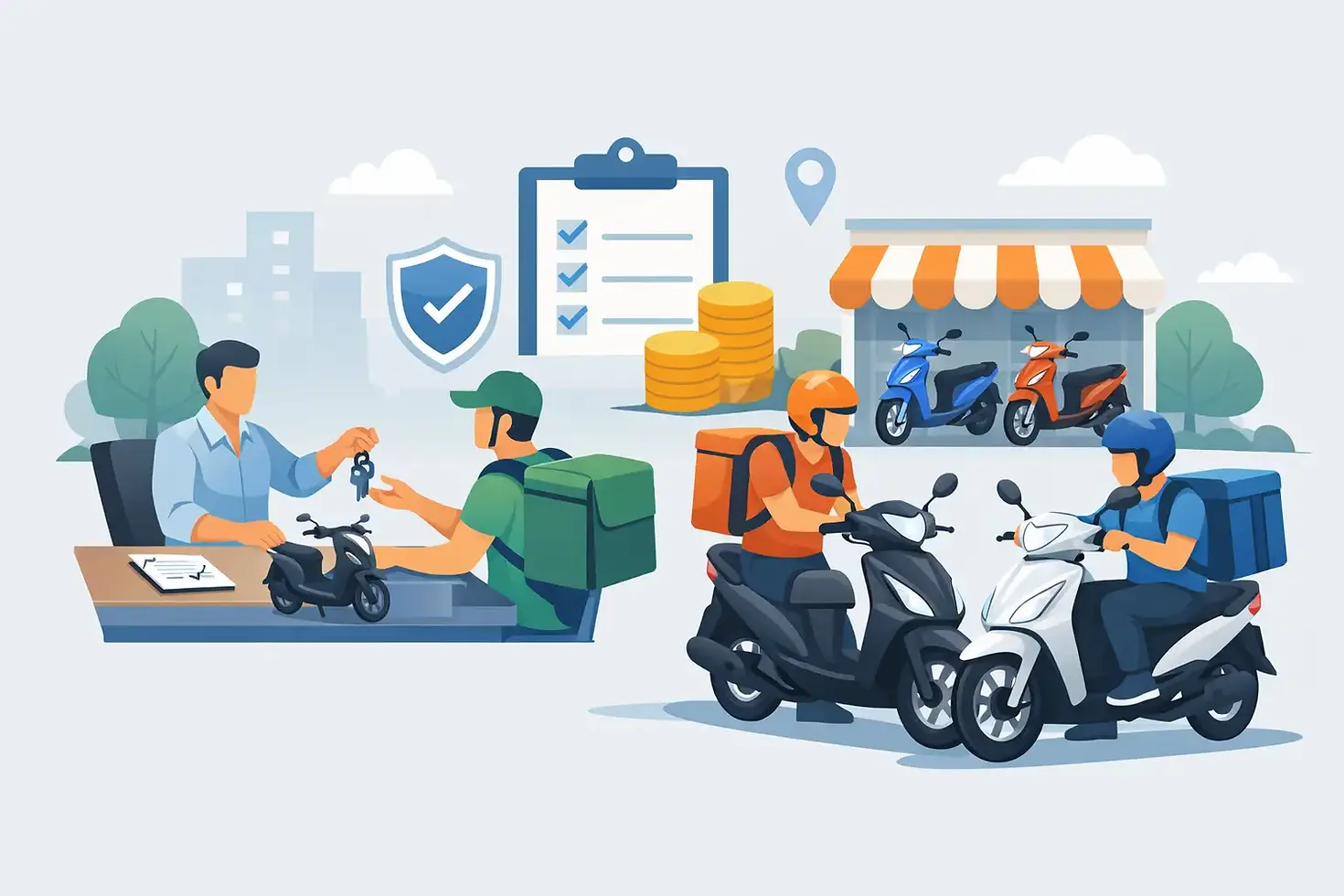
That is why many riders prefer bundled rentals. When registration, CTP insurance, maintenance, roadside help and basics like a helmet or mobile phone holder are included, it removes a lot of friction. You know what you are paying, and you are not chasing mechanics or trying to organise paperwork between delivery shifts.
What riders should look for before renting
The biggest mistake is focusing only on the weekly rate. Price matters, but value matters more. A slightly higher rental fee can still work out cheaper if it includes support and keeps you on the road.
Reliability should come first. Delivery riding is hard on a bike because of constant starts, stops, short trips and long hours. You want something built for regular urban use, not a machine that spends more time in the workshop than on the street. Ask how maintenance works, how quickly issues are handled, and what happens if the bike becomes unsafe to ride.
Flexibility matters too. Some riders are testing delivery apps for the first time. Others already know they will be riding every day for months. A rigid contract does not suit both groups. Good rental providers offer options that let you start small and extend if the work stacks up.
Then there is support. If you are stuck at night with a flat battery or a mechanical issue, you need to know who to call. A provider with roadside assistance and emergency help is not just a nice extra. For delivery riders, it is part of staying employable.
The costs behind renting for delivery work
There is no single answer to rental cost because it depends on the bike, the rental term and what is included. A short-term rental may have a higher weekly cost but lower commitment. A longer rental often reduces the weekly spend and gives you more certainty.
Still, the real comparison is not just rental versus rental. It is rental versus ownership. Buying a bike means paying upfront or taking on finance, then covering registration, insurance, servicing, tyres, repairs and unexpected breakdowns yourself. For some riders, ownership makes sense later. At the start, though, renting often wins because it reduces the cash needed to begin.
It also lowers your risk. If delivery work is inconsistent, if you are new to Melbourne roads, or if you are only planning to ride for a season, buying can lock you into costs you do not want. Renting keeps things simpler while you work out your income pattern.
Why scooters and small motorbikes suit delivery riders
Not every rider needs a big motorbike. In fact, for metro delivery work, smaller bikes and scooters are often the smarter option. They use less petrol, they are easier to manoeuvre through traffic, and parking is much less of a headache.
That matters more than people think. Delivery jobs are won and lost in the small moments - finding a spot out front, slipping through congestion, getting back on the road quickly. A lighter, economical bike can make the whole shift easier.
It depends on where and how you work, though. If you are riding longer suburban distances, comfort and fuel range start to matter more. If most of your work is short trips in dense areas, agility becomes the priority. The best rental setup is the one that matches your actual delivery pattern, not the one that looks best in photos.
What documents and checks are usually involved
Riders are often surprised by how straightforward the process can be. In most cases, you will need a valid motorcycle licence for the class of bike you are renting, identification, and a way to set up payment. Some providers may also ask about your riding history or require a bond, depending on the rental arrangement.
The smart move is to ask clear questions early. Is there a minimum rental term? Is there a mileage limit? What happens if the bike is damaged? Are servicing intervals managed for you? Can the bike be delivered to your location? A provider that answers these quickly and clearly usually makes the rest of the experience easier too.
This is where a service-driven rental business stands out. If the bike can be brought to you and ongoing support is handled without endless back-and-forth, that saves time you could be using to earn.
How to spot a rental that is actually delivery-friendly
A bike rental can be fine for general transport but poor for delivery work. Delivery-friendly means the provider understands that the bike is being used commercially, heavily and often under time pressure.
Look for signs that the service is built around convenience. Fast approvals help, but they are only part of it. What really helps riders is practical support - maintenance included, quick issue resolution, safety gear sorted, and extras like a mobile phone holder already available. Those things sound small until you are trying to complete orders across South Melbourne or St Kilda in the middle of a busy shift.
It is also worth asking whether there are longer-term pathways available. Some riders start with a standard rental, then move to rent-to-own once they know delivery income is stable. That kind of option can be useful if you want mobility now without giving up the chance to build towards ownership later.
When renting makes more sense than buying
If you are just starting delivery work, renting usually makes more sense. You get on the road faster, avoid a big upfront spend and keep your options open. That is especially useful for students, international residents, and riders who need a working vehicle immediately but are not ready to commit to ownership.
Renting also suits people who do not want admin. Ownership sounds attractive until registration is due, the bike needs work, or a repair bill lands at the worst possible time. A bundled rental shifts much of that hassle away from the rider.
Buying starts to look better when you are sure of your long-term plans, have the cash flow to absorb repairs, and want an asset at the end of it. Even then, some riders still prefer renting because predictable weekly costs are easier to budget than irregular ownership costs.
Choosing a provider without wasting time
The quickest way to narrow your options is to think like a working rider, not a casual renter. Ask what keeps you earning. You need a bike that is cheap to run, easy to park, supported when things go wrong, and available without a drawn-out process.
If a provider can supply the vehicle, include the essentials, and keep maintenance and emergency support simple, that is usually worth more than chasing the lowest advertised figure. For riders in Melbourne and Geelong, that practical setup is often the difference between a stressful side hustle and a smooth one.
Skootify Australia is built around that kind of convenience, with flexible rental options, support included and bikes set up for everyday urban use.
If you are thinking about delivery work, do not just ask what the bike costs. Ask how quickly it gets you earning, how easily it keeps you moving, and how much hassle it takes off your plate once the orders start rolling in.


Comments