


A Guide to Wet Weather Riding in Melbourne

Rain does not have to cancel your commute, delivery shift or trip across town. But wet roads change how a scooter or motorbike responds, especially around Melbourne tram tracks, painted lane markings and oily intersections. This guide to wet weather riding gives you the practical habits that make rainy-day travel safer, calmer and less stressful.
The goal is not to ride exactly as you would on a dry day. It is to give yourself more time, more space and smoother control inputs. A few simple adjustments can make a big difference when the weather turns.
Start with the right wet-weather gear
A waterproof jacket and pants are not only about staying comfortable. When you are cold, wet and distracted, your reactions slow down. Choose gear that keeps rain out while still allowing you to move freely on the controls. A waterproof outer layer over your usual riding gear can work well for regular commuters.
Your gloves matter more than many riders expect. Wet, cold hands reduce grip and make it harder to operate the brake levers smoothly. Waterproof gloves with a secure grip are a worthwhile addition, particularly if you ride early in the morning or at night.
Your helmet visor needs attention too. Before leaving, clean it inside and out. Smears, road grime and scratches catch headlight glare and can make it difficult to judge traffic movement. If your visor fogs up, use the vents and stop safely if you cannot see properly. Do not try to wipe a fogged visor while moving through traffic.
High-visibility colours or reflective panels help drivers spot you through rain spray and low light. You do not need to look like a road worker, but a bright waterproof layer or reflective details can give other road users an extra second to notice you.
Check your scooter before riding in rain
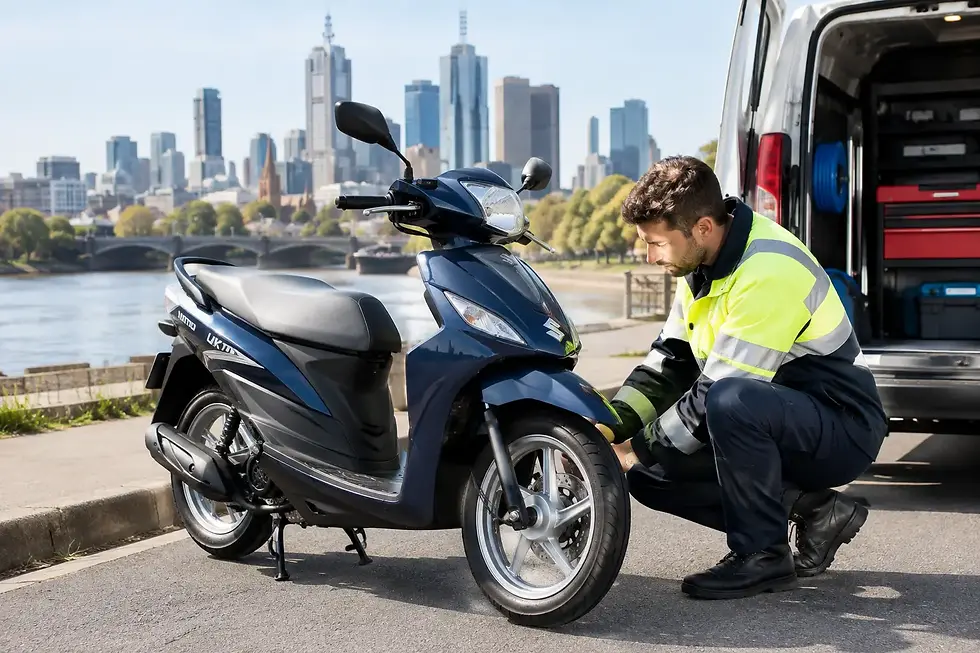
Wet-weather confidence starts before you pull away. Take a minute to check your tyres, lights and brakes. This is particularly useful if your scooter has been parked outside or you have not ridden for a few days.
Tyres need enough tread to clear water and maintain grip. Look for cuts, embedded objects and uneven wear, then check the pressure according to the vehicle guidance. Underinflated tyres can feel vague and unstable, while overinflation may reduce the tyre contact patch. If a tyre looks worn or feels unusual, do not gamble on a wet ride.
Make sure your headlight, brake light and indicators work. Rain can make a dark-coloured scooter almost disappear against a grey road, so being seen is just as important as seeing ahead. Test both brakes gently as you begin your ride. If they feel soft, grabby or less responsive than normal, stop and arrange maintenance.
If you rent with Skootify, maintenance and support are part of taking the ownership hassle off your plate. Still, a quick rider check before each trip is the fastest way to pick up a problem early.
A guide to wet weather riding: slow, smooth and steady
The biggest change in rain is grip. Water reduces traction, and the first rain after a dry spell can be especially slippery because it lifts oil, dust and residue to the road surface. That means quick braking, sharp turns and sudden throttle movements all carry more risk.
Start by reducing your speed. This is not about crawling along and becoming unpredictable. It is about leaving enough room to react without grabbing the brakes or swerving. Lower speed gives your tyres a better chance to hold on when you cross a wet patch or need to avoid a car door opening.
Use smooth inputs. Roll on the throttle progressively, brake gradually and lean gently into corners. Keep your body relaxed and look where you want to travel, rather than staring at puddles or the gutter. Your scooter tends to follow your vision, so keep your eyes scanning ahead for the safest line.
Increase your following distance well beyond your dry-road gap. Cars take longer to stop in the wet, and so do scooters. More space lets you brake in a controlled way instead of reacting at the last second. It also keeps you out of the worst spray from the vehicle ahead.
Watch for Melbourne’s low-grip surfaces
Not every wet surface is equally slippery. Painted arrows, pedestrian crossings, metal drain covers, leaves, gravel and tram tracks deserve extra care. Try to avoid braking or turning sharply while crossing them.
Tram tracks are a common challenge around inner Melbourne. Cross them as close to a right angle as traffic conditions safely allow. A shallow angle can pull your tyre along the track, particularly when it is wet. Keep your speed steady, avoid sudden steering corrections and make your move only when there is clear space around you.
Puddles can hide potholes, deep drains and uneven road surfaces. If you cannot tell how deep a puddle is, avoid it where practical. If you must ride through shallow standing water, slow down, keep the scooter upright and avoid accelerating hard. Large puddles can also soak your brakes, so test them gently afterwards when safe to do so.
Be cautious at intersections, service stations and roundabouts. These areas collect fuel, oil and grime, which can become slick in rain. Approach early, brake before the turn and keep the scooter as upright as possible through the curve.
Brake earlier and avoid sudden moves
Good braking in wet weather is progressive. Roll off the throttle, apply gentle pressure, then increase it smoothly as the scooter settles. Avoid snatching either brake lever. Sudden braking can upset the tyres when grip is already limited.
Use both brakes as designed for your scooter, with a balanced and steady touch. If your vehicle has ABS, it can help prevent wheel lock under hard braking, but it does not create extra grip or shorten every stopping distance. You still need space, sensible speed and smooth control.
Plan ahead so you can finish most of your braking while travelling straight. Braking hard while leaned over in a corner raises the chance of a slide. If traffic changes suddenly, prioritise keeping the scooter stable and upright rather than making an aggressive manoeuvre.
Make yourself easy to see
Rain reduces visibility for everyone. Car windows fog, mirrors are covered in droplets and drivers may be focused on wipers, traffic and poor road conditions. Assume you are less visible than usual.
Ride with your headlight on, use indicators early and position yourself where you can be seen in the lane. Avoid sitting beside a car in its blind spot, especially near turns and lane changes. At traffic lights, leave enough room from the car in front to move away if needed, rather than stopping right on its bumper.
For delivery riders, it can be tempting to push on when the rain starts. Give yourself extra time instead. Being a few minutes late is far better than taking a corner too fast, arriving soaked through or damaging the vehicle. If conditions become severe, pull over somewhere safe and wait for the worst of the downpour to pass.
Know when not to ride
Most light rain can be managed with good gear and good judgement. Severe storms, flooding, strong winds and poor visibility are different. If water is flowing across the road, never assume it is shallow. Floodwater can hide holes, debris and damaged road edges, and even a small scooter can be destabilised by moving water.
Strong crosswinds can also be difficult, particularly on exposed roads, bridges and wide intersections. Slow down, keep a relaxed grip and give larger vehicles extra room. If the wind is pushing you across the lane or visibility has dropped to an unsafe level, find a safe place to stop.
There is no prize for riding through conditions that make you uncomfortable. Flexible transport should make life easier, not force you into a risky trip.
Build confidence one wet ride at a time
Wet-weather riding gets easier when you practise the basics in manageable conditions. Start with a short daytime trip on familiar streets rather than your first rainy ride being a busy peak-hour run across town. Notice how the brakes feel, how much extra room you need and which road surfaces demand the most care.
Keep your route practical, your gear dry and your riding smooth. When rain arrives over Melbourne, the best move is not to rush - it is to give yourself the time and space to get where you are going safely.


Comments