


How to Schedule Motorcycle Fleet Maintenance

A delivery bike that will not start at the beginning of a busy dinner rush is more than an inconvenience. It can mean late orders, unhappy customers and a rider left waiting on the kerb. When you schedule motorcycle fleet maintenance properly, you protect your vehicles, your team and the service your customers rely on.
For restaurant operators, delivery businesses and teams running multiple scooters or motorbikes around Melbourne, maintenance needs to be planned around the work - not left until a warning light appears. A clear schedule keeps small issues from becoming expensive downtime and helps every rider head out with confidence.
Why motorcycle fleet maintenance needs a proper schedule
Motorbikes and scooters used for deliveries work harder than the average weekend ride. They spend long hours in stop-start traffic, carry loads, make frequent short trips and deal with rain, potholes, tram tracks and tight parking spaces. That usage adds up quickly.
Waiting for something to fail can look cheaper in the short term, but it usually costs more. A flat tyre can put one rider off the road for hours. Worn brake pads can become a safety issue. Missed oil changes can shorten engine life and turn a routine service into a major repair.
A planned maintenance system gives you a better view of your real operating costs. It also helps you avoid the scramble of finding a mechanic when you are already short on bikes. The goal is simple: keep vehicles safe, legal and available when your business needs them most.
How to schedule motorcycle fleet maintenance around real work
The best schedule is not necessarily the most complicated one. It is the one your team can follow every week, even during peak periods. Start by separating quick daily checks from services that need to happen at set kilometre or time intervals.
Build a record for every bike
Give each motorcycle or scooter its own maintenance record. Include the registration number, make and model, current odometer reading, service history, tyre changes, repairs and any recurring faults. If different riders share the same vehicle, this record stops important details getting lost between shifts.
A basic spreadsheet can work for a small fleet. For larger operations, fleet software may save time by sending reminders and tracking costs. Either way, someone needs clear responsibility for updating the records. A schedule only works when the kilometres and completed work are accurate.
Use kilometres and time, not guesswork
Your owner handbook should set the service intervals for oil, filters, valve checks, brake fluid and other key items. Use those as the starting point, then consider how the bike is being used. A scooter doing delivery runs six days a week may need attention earlier than one used only for a short commute.
Set reminders before the due date, rather than on it. If a service is due at 5,000 kilometres, flag it at 4,500 kilometres. That gives you time to book the work without pulling a vehicle out of service at the worst possible moment.
Time matters too. Even a low-kilometre bike may need regular checks because fluids, tyres, batteries and rubber components age. If a vehicle sits unused for a period, it still needs inspection before it goes back into regular service.
Plan servicing around quieter shifts
For many food businesses, the best time to service a bike is between peak delivery windows or on the quietest trading day. Do not schedule every vehicle at once. Stagger bookings so there is always enough transport available to cover the roster.
If your fleet is small, consider keeping one backup scooter or motorbike available. It may not earn money every day, but it can save a shift when another vehicle needs unexpected repairs. This is especially useful on wet weeks, when tyre, brake and electrical issues become harder to ignore.
Daily checks riders can actually complete
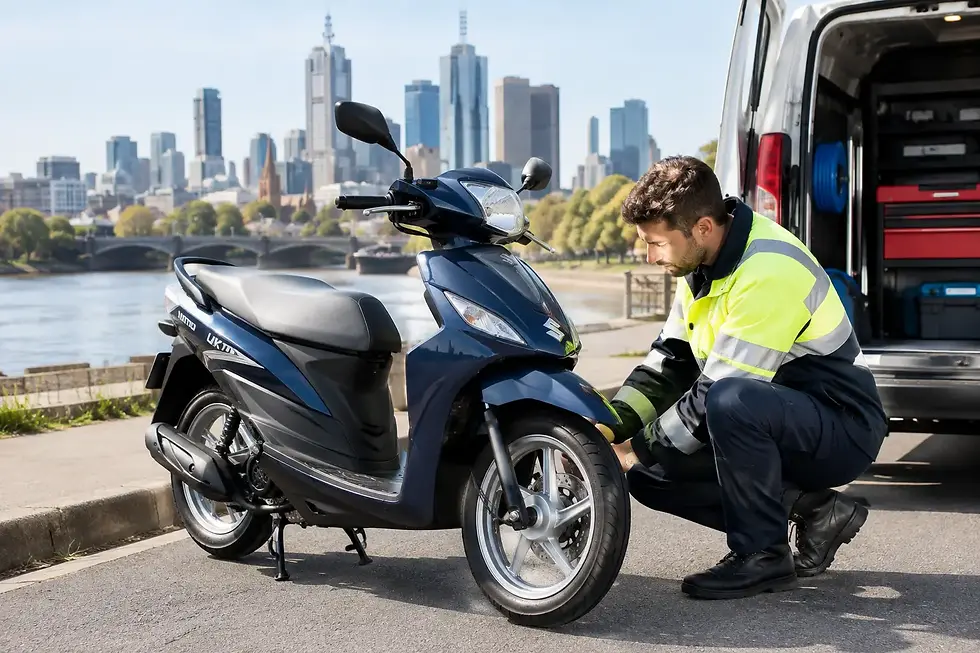
A rider does not need to be a mechanic to spot a problem early. A quick pre-ride check should take only a few minutes and become part of signing on for the shift. Keep it practical, consistent and easy to report.
Before heading out, riders should check:
tyre pressure, visible damage and remaining tread
front and rear brakes for feel, response and unusual noise
lights, indicators, horn and mirrors
fuel level, oil leaks and obvious fluid leaks
chain condition on chain-driven bikes, including lubrication and tension
the battery, dashboard warnings and any new vibration or strange sound
Encourage riders to report faults straight away, even when the bike still feels rideable. A squeal, wobble or slow start can be the first sign of an issue that will become far more disruptive tomorrow.
Set clear rules for urgent repairs
Not every issue can wait for the next scheduled service. Your team needs to know what makes a motorcycle unsafe to ride and who they should contact. Brakes that feel soft, tyres with damage, leaking fuel, steering problems, overheating, major warning lights and electrical faults should be treated as urgent.
Take the affected vehicle out of service until it has been assessed. Asking a rider to keep going because the shift is busy can create a much bigger problem, particularly if it leads to an accident or roadside breakdown.
It also helps to have a simple reporting process. Riders should be able to send a photo, describe the fault and share the odometer reading from their mobile. The fleet manager can then decide whether the bike needs immediate collection, a workshop booking or monitoring until the next service.
Track the costs that affect your fleet
A maintenance calendar is not only about avoiding breakdowns. It can show you which vehicles are costing more than they should. Record routine servicing separately from tyres, crash repairs, batteries and unplanned mechanical work. Over a few months, patterns become easier to spot.
For example, repeated punctures may point to a regular route with poor road surfaces or a need for better tyres. Frequent brake wear may mean riders are carrying heavier loads, travelling down steep streets or riding in dense inner-city traffic. High fuel use can signal poor tyre pressure, a mechanical issue or a vehicle that no longer suits its job.
There is a trade-off here. Cheaper parts and delayed services may reduce this month's bill, but quality work and timely maintenance generally reduce lost delivery time. The right approach depends on your fleet size, kilometres and cash flow, but safety-critical repairs should never be postponed.
Keep compliance and safety in the same calendar
Maintenance should sit alongside registration dates, insurance requirements, rider licence checks and any business-specific safety processes. A roadworthy bike is essential, but it is only one part of running a dependable delivery operation.
Make sure helmets are in good condition, phone holders are secure and cargo setups do not interfere with lights, handling or visibility. A poorly fitted delivery box can affect balance and put extra strain on mounts. Check these items regularly, especially when riders swap between vehicles.
For rental fleets, clear responsibility matters even more. Confirm who handles routine checks, servicing bookings, roadside assistance and damage reporting before the vehicle goes into daily use. Service-supported rental options can reduce the admin load for operators who need transport ready to work without taking on the full burden of ownership.
Make the schedule easy to follow
The most effective maintenance plan is visible. Keep the next service date and kilometre target where the person managing the fleet can see it. Review upcoming work once a week, not once a problem appears.
A simple rhythm works well: riders complete pre-ride checks each shift, the manager reviews reported faults and odometer readings weekly, and scheduled servicing is booked ahead of time. Add a monthly review of costs, tyre condition and any repeated issues. This is enough structure for many small fleets without creating unnecessary paperwork.
If you rent vehicles for delivery work, choose a provider that makes maintenance support clear and practical. Skootify Australia offers a convenience-focused option for operators who want scooters and motorbikes backed by maintenance and roadside support, helping reduce the pressure of keeping a vehicle on the road.
A bike that is checked early, serviced on time and taken off the road when something feels wrong gives your riders a better shift and your customers a better experience. Put the next service date in the calendar now - before the next busy night puts it to the test.


Comments