


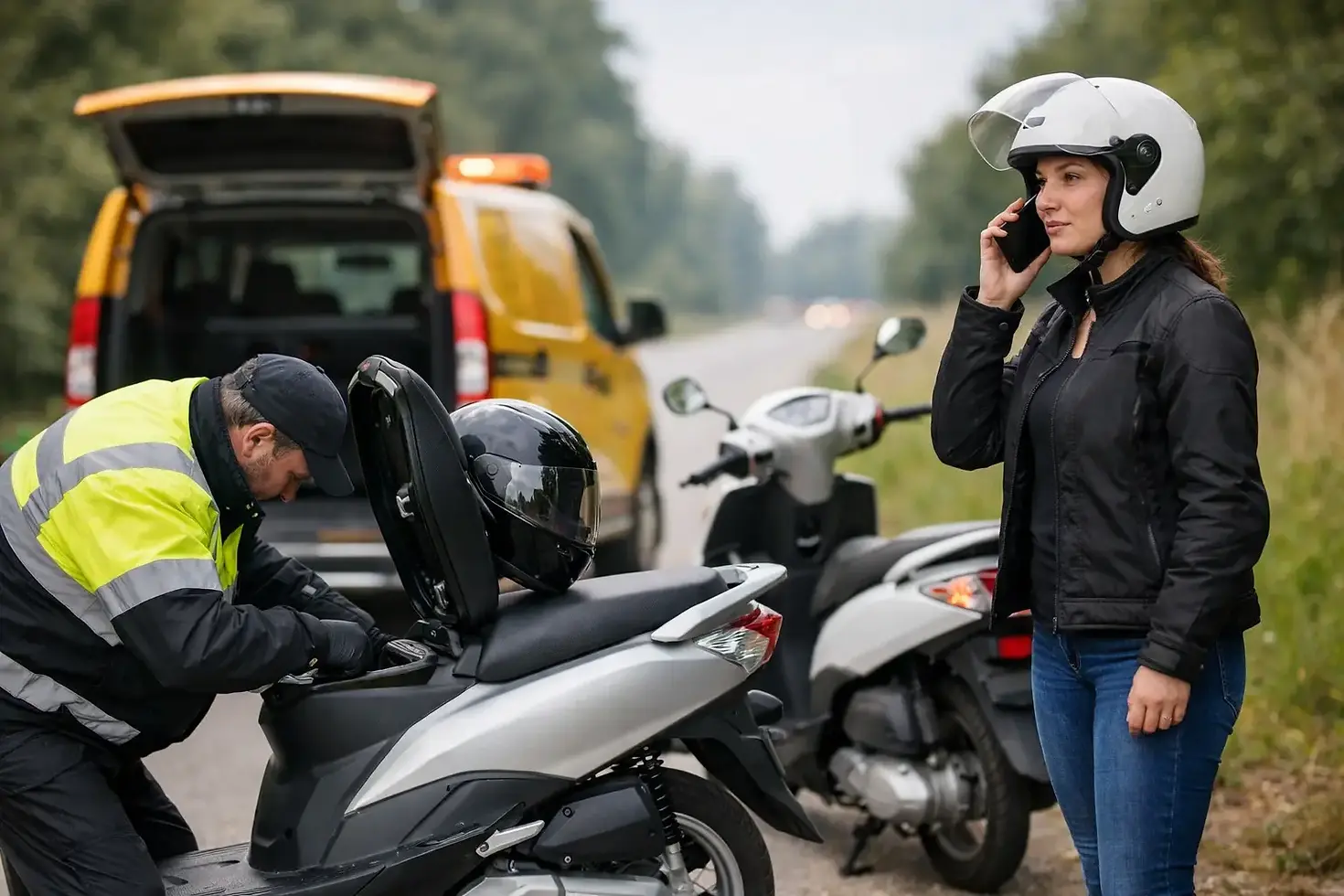
Motorbike Breakdown Assistance When You Need It
- Skootify Australia
- 4 days ago
- 5 min read

A flat battery outside your shift, a puncture on the way home, or an engine that will not start in a supermarket car park can turn a normal day upside down fast. Good motorbike breakdown assistance is not just about getting a bike from A to B. It is about keeping you safe, reducing downtime and giving you a clear next step when your ride refuses to cooperate.
For Melbourne riders, especially commuters and delivery riders, time off the road can mean missed work, late pickups and unnecessary stress. The right support makes a breakdown manageable rather than expensive and chaotic.
Start with safety, not the repair
When your motorbike loses power or develops a problem, get yourself out of traffic first if it is safe to do so. Pull over onto a level area away from moving vehicles, turn on your hazard lights if fitted, and stay visible. At night or in wet weather, visibility matters even more. Keep your helmet on if you are standing close to traffic and avoid working on the bike from the traffic side.
Do not keep trying to start a bike that is making harsh mechanical noises, leaking fuel, overheating or showing signs of electrical burning. A quick restart might seem worth a try, but repeated attempts can drain the battery, worsen a fault or leave you stranded in a less safe spot.
If you are on a freeway, a narrow arterial road or anywhere you cannot safely stand clear of traffic, call for urgent help rather than attempting roadside repairs. Your bike can be fixed. Your safety comes first.
What motorbike breakdown assistance should cover
Roadside support is not identical across every provider, so it pays to know what is included before you need it. For most riders, useful motorbike breakdown assistance should cover an initial assessment, help with simple faults where practical, and transport options if the bike cannot be made safe to ride.
Common call-outs include flat batteries, punctures, empty fuel tanks, keys locked in storage compartments, loose chains and starting issues. Some problems can be resolved on the spot. A battery may be boosted, a loose connection secured or a minor tyre issue assessed. Other faults need a workshop - and that is where recovery arrangements matter.
Ask these practical questions when comparing support:
Is roadside call-out support included, or is there a fee each time you need help?
Can the provider transport the motorbike if it cannot be repaired roadside?
Is there a limit on towing distance or the number of call-outs?
Is assistance available after hours, on weekends and during public holidays?
Who do you call, and how quickly can they give you an update?
The cheapest option is not always the best value if it leaves you arranging a tow, finding a mechanic and paying separate bills when something goes wrong. For a rental rider, support should be part of a straightforward service package, not a confusing extra.
The details to have ready when you call
A fast response starts with clear information. Before calling roadside support, take a breath and note your exact location. Use a nearby street number, intersection, landmark or the location pin on your mobile. “Near the city” is difficult to act on. “Outside 245 Princes Highway, Dandenong, heading south” gives a support team something useful immediately.
You should also be ready to explain the bike model or registration, what happened just before the issue, and whether the motorbike is in a safe location. Mention warning lights, strange sounds, a flat tyre, smoke, fuel leaks or any visible damage. If you have been in a crash, tell the operator straight away, even if the bike appears rideable.
Avoid guessing at a diagnosis. Saying “it will not start and the dash lights are dim” is far more helpful than deciding it must be the starter motor. Good information helps the technician bring the right equipment or arrange the right type of recovery.
Problems you can prevent before they stop your day
Not every breakdown is avoidable, but simple checks dramatically lower the odds of getting stuck. A two-minute look before riding is especially worthwhile if you depend on your bike for deliveries, commuting or late-night travel.
Check that your tyres look properly inflated and are free from obvious damage. Look under the bike for fresh leaks. Test your indicators, brake light and headlight. Make sure the fuel level is enough for your planned trip, not just enough to reach the next servo. If your motorbike has a chain, keep it correctly lubricated and tensioned according to the manufacturer’s requirements.
Battery trouble is another common frustration. If starting becomes slow, the lights dim noticeably or the bike has been sitting unused, get it checked before it leaves you stranded. Short trips, cold mornings and accessories such as phone chargers can all add pressure to a weak battery.
For rented bikes, report a concern early rather than waiting for the next scheduled service. A slight rattle, inconsistent starting or a tyre that seems to lose air is easier to handle when you are parked safely at home than when you are halfway through a shift.
When not to ride on
There is a big difference between a minor inconvenience and a fault that makes riding unsafe. Do not continue riding if brakes feel soft or unresponsive, tyres are damaged, steering feels unstable, fuel is leaking, the engine is overheating, or warning lights are accompanied by poor performance. Likewise, do not ride after a collision until the bike has been properly checked.
It can be tempting to nurse a bike home to save time. That decision can turn a small repair into a major mechanical issue, or put you and other road users at risk. Calling for assistance is often the quicker option once you factor in the cost and delay of further damage.
Delivery riders face an added pressure to keep moving, particularly during busy periods. But a late order is recoverable. A crash, seized engine or roadside injury is not worth the gamble. Let the restaurant or customer know there is a vehicle issue, then focus on getting to a safe place and arranging help.
Rental support removes the ownership headache
Owning a motorbike means organising servicing, registration, insurance, repairs and roadside cover yourself. For riders who need an affordable way to get around Melbourne without carrying all that responsibility, a well-supported rental can be the simpler choice.
With Skootify Australia, practical riding support is built around keeping customers mobile, with maintenance, roadside assistance and 24/7 emergency support available as part of the service approach. That matters whether you are heading to class, commuting across town or using a scooter for delivery work. Instead of searching for a mechanic while parked on the side of the road, you have a clear point of contact and a team that understands the vehicle.
There is still a rider responsibility. Treat the bike carefully, follow service instructions, keep fuel in it, report damage promptly and do not ignore a warning sign. Support works best when issues are raised early and the bike is used within its intended conditions.
Build a small roadside plan before you ride
You do not need to carry a workshop in your under-seat storage. A charged mobile, your support number saved in contacts, a phone holder or secure pocket for navigation, and a basic understanding of your rental or roadside policy will cover most situations. If you use your motorbike for work, carry a power bank so a flat phone does not become a second emergency.
It is also smart to tell someone your general route when riding late or travelling beyond your usual area. This is not about making riding complicated. It is about avoiding the avoidable, particularly when rain, darkness and peak-hour traffic make a simple fault harder to manage.
A breakdown is never convenient, but it does not have to derail your whole day. Ride with a plan, respond calmly when something feels wrong, and choose transport support that gets you help without sending you on a scavenger hunt for answers.


Comments